MANILA, Philippines – PLDT Enterprise, in partnership with 8×8, introduced Silent Mobile Authentication (SMA) last February 11, 2026 to combat rapid growing mobile fraud attacks and ensure seamless digital transactions in businesses online in the Philippines. As opposed to using SMS one-time passwords (OTPs), SMA enables a faster user mobile verification.

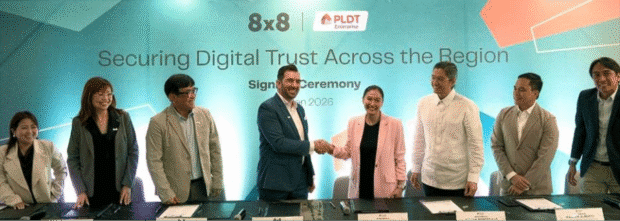
To combat common fraud attacks like spoofing and SIM-swap attacks, SMA aimed to provide an alternative by silently verifying users through mobile network data instead of requiring OTPs and reducing authentication delays. In line with this, SMA demonstrated higher verification success rates compared to OTP-based workflows, which allows businesses to balance security, user experience, and operation efficiency.
Igor Mostovoy, the Product Director, CPaaS at 8×8, Inc, explained that with 8×8 Silent Mobile Authentication, businesses will be equipped with quick and secure user verification without the use of traditional OTPs.
“In partnership with PLDT, we’re equipping businesses with innovative tools to protect their customers and maintain trust as digital adoption grows, managing authentication quickly without heavy development effort,” Mostovoy said. With the introduction of SMA in the country, this will help digital transactions combat against the rapid surge of scams against businesses online.
Secure mobile user authentication
Meanwhile, PLDT Enterprise has recently introduced SmartSafe SilentAccess to ensure secure mobile user verification by validating users through mobile network and SIM-based signals. This partnership also aligns SmartSafe SilentAccess to be integrated with 8×8 Silent Mobile Authentication to help businesses reduce fraud and improve customer experiences without requiring OTPs.
Armie Sason, Head of Key Industries Group 2 at PLDT Enterprise, emphasized that PLDT Enterprise and 8×8 commit to deliver secure and seamless verification for millions of mobile users. This solution also ensures the enhancement of security in digital transactions by mitigating common fraud vectors.
“Together, we are enabling enterprises to protect their customers, reduce fraud, and support the Philippines’ ongoing digital transformation,” Sason said. Sason also shared that this project aimed to strengthen the country’s digital infrastructure.
Initiative against rapidly growing mobile fraud attacks in the Philippines
More than 52% of Filipinos were reported to have been scammed at least once in their lifetime, seven points higher than the ASEAN average, based on a report by GSMA. Eight percent of Filipino respondents have been victimized by scams with the increase rising by six percent in the past year, an increase matched only by Thailand.
With the increasing online fraud attacks, Julian Gorman, Head of Asia-Pacific, GSMA, explained that the government must push an initiative that is fully-coordinated and data-driven defense to protect consumers and sustain the nation’s digital-growth.
“The Philippine’s digital economy depends on trust. Our latest evidence shows that trust is being eroded faster than it is being rebuilt.” Gorman said. In response to fighting against online scams, GSMA announced a foundry project to aid Philippine mobile operators to collaborate and share threat intelligence with financial sector partners.
By working along with the GSMA APAC Cross-Sector Anti-Scam Taskforce (ACAST) Combating Scams Foundry Project, PLDT/Smart, along with top Philippine telecommunication providers Globe and DITO, launched commercial services to tackle scams and fraud, and to fight against the surge of online fraud attacks in the nation. With this initiative, this includes PLDT Enterprise’s SmartSafe SilentAccess as part of the GSMA Open Gateway initiative.
8×8, Inc. (NASDAQ: EGHT) is a global communications provider that ensures security and customer experience through the use of Silent Mobile Authentication, eliminating manual code entry of one-time passwords.
PLDT Enterprise is a corporate business arm of PLDT, a telecommunications and digital services provider in the Philippines. (Regine Andres, INQUIRER.net Intern)