LAPU-LAPU CITY, Philippines — It’s official, the rest of the Southeast Asian region will now be part of the Crossfire (CFS) Esports ecosystem as it expands beyond just the Philippines.
In an official announcement released on Friday, March 13, 2026, Crossfire Esports revealed its 2026 roadmap, which revealed the inclusion of the rest of the Southeast Asian region.
This comes after their three-year focus on cultivating the Crossfire Esports scene in the Philippines.
“In 2026, the competitive ecosystem will expand to Southeast Asia, introducing a new regional structure that brings invited teams from across the region together while maintaining clear competitive pathways,” Crossfire Esports stated.

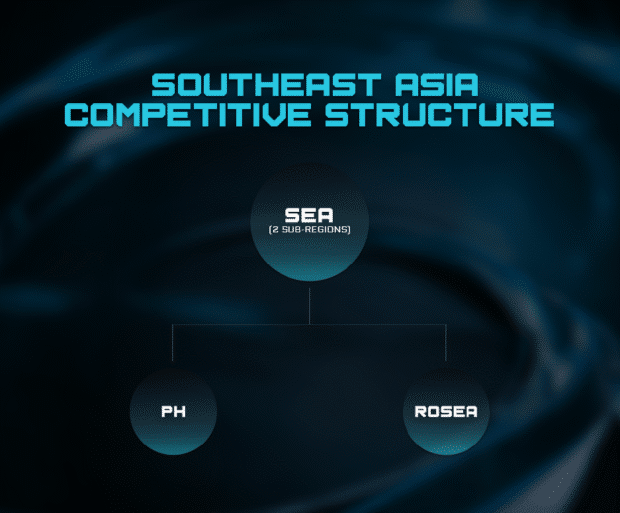
Under this expanded ecosystem, the Southeast Asian Crossfire Esports ecosystem will now feature two competitive sub-regions:
- Philippines (PH)
- Rest of Southeast Asia (RoSEA)
That said, they clarified that the Vietnamese region wouldn’t be part of the new Southeast Asia regional structure, as it operates separately.
Meanwhile, the list of countries that will be part of the RoSEA sub-region is yet to be revealed, but it will be detailed in the upcoming official tournament rules and competition documentation.
Crossfire’s Southeast Asia Competitive Structure
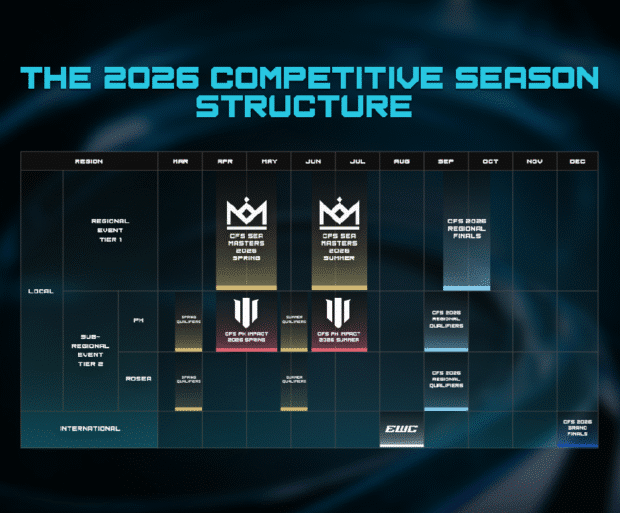
With two new sub-regions, the 2026 competitive season will be operating under a hybrid competitive model, featuring both SEA-level competitions with sub-regional qualification pathways.
Throughout the year, the 2026 competitive season will be divided into three seasons, which will all feature both Tier 1 and Tier 2 events. The three seasons are as follows:
Spring Season
- • Spring Qualifiers – PH (Tier 2)
- • Spring Qualifiers – RoSEA (Tier 2)
- • CFS SEA MASTERS 2026 (Tier 1)
- • CFS PH IMPACT 2026 (Tier 2)
Summer Season
- • Summer Qualifiers – PH (Tier 2)
- • Summer Qualifiers – RoSEA (Tier 2)
- • CFS SEA MASTERS 2026 (Tier 1)
- • CFS PH IMPACT 2026 (Tier 2)
CFS Path Season
The 2026 competitive season concludes with the CFS Path Season, where teams compete through regional qualifiers for a place at the CFS Regional Finals – SEA.
- • CFS 2026 Regional Qualifiers: PH (Tier 2)
- • CFS 2026 Regional Qualifiers: RoSEA (Tier 2)
- • CFS 2026 Regional Finals: SEA (Tier 1)
On top of this, Southeast Asia’s Tier 1 competitions will also serve as direct qualification pathways to major international Crossfire Esports events. This includes the following:
- CFS SEA Masters 2026: Summer – Top-performing teams will have the chance to qualify for the Esports World Cup (EWC).
- CFS 2026 Regional Finals: SEA – The region’s best teams will compete for spots at the CFS Grand Finals, the highest level of international CFS Esports competition.
New regions, better competition
In an exclusive interview with Tech INQ, first-person shooter (FPS) shoutcaster Joshua “Jusuave” Villamar expressed that this new Southeast Asian region format will make teams better in international competitions.
During the interview, he pointed out how the other Crossfire regions had more matches played throughout the year compared to what the Filipino reps have had.
“This new format gives our teams more server time and opportunities to test each other in preparation for the International Stage,” Jusuave said during the interview.
“Adding more countries into the CF region can only do good for all teams involved because that exposes teams to different approaches to the game, which will give them more insight in preparation for the global stage,” Jusuave explained.
With that, he is excited for what is to come in Crossfire Esports with its new ecosystem.
“I’m excited to see if we find any Singaporean, Thai, and Malay talent in the Regional Finals, seeing as there’s plenty of talented FPS players in SEA,” he stated.
“I would love to see if any of the SEA esports teams like Onic and Boom sign a CFS team with the expansion of the region, along with EWC being included in the Esports calendar.”