
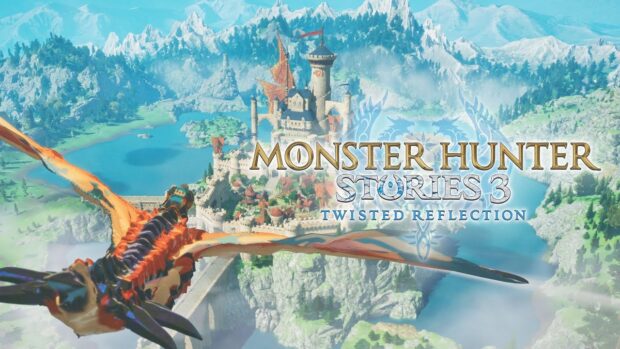
Monster Hunter Stories 3: Twisted Reflection and the long-running Pokémon series share an obvious foundation. Both revolve around collecting creatures, building a team, and exploring a vibrant world where monsters are companions as much as they are battle partners.
READ MORE: Pokémon Pokopia global sales surpass 2.2 M units
At first glance the formula feels familiar to anyone who has spent years catching Pokémon and assembling their dream team. However, once you spend some time with Monster Hunter Stories 3, it becomes clear that the game approaches the monster-collecting fantasy from a different angle. In some surprising ways, it’s even better than Pokémon.
An environmentalist twist
Monster Hunter Stories 3: Twisted Reflection treats its monsters as part of a living ecosystem rather than simply collectible units with players taking the role of Riders in charge of safeguarding nature with the creatures you hatch and raise, known as Monsties, are directly tied to the environment around them.
Instead of existing only within your party or in a storage system, monsters are presented as part of a broader natural cycle that continues whether or not they are traveling with you.
That design choice gives the world a sense of authenticity that many creature-collection games struggle to achieve. The monsters feel like wildlife that happens to be able to fight alongside you, rather than assets designed purely for battle.
Releasing monsters is an intentional part of the gameplay loop. When you release a monster, it returns to the ecosystem and helps improve the gene pool of the surrounding population. Over time this can influence the quality and potential of future monsters you encounter in the world.
Instead of feeling like you are discarding something you no longer need, the act of releasing a monster becomes a meaningful choice that contributes to the health of the environment. PETA would approve!
The idea of ecological balance is something the broader Monster Hunter universe has always emphasized, and Stories 3 carries that philosophy into its monster-raising mechanics. Because the monsters originate from a world that already treats them as part of a natural food chain, their presence in the story feels grounded.
Each Monstie carries the design and personality of a creature that belongs in a functioning ecosystem. When you form a bond with them, it feels less like recruiting a tool for battle and more like partnering with a creature that exists independently of you.
Gotta catch ‘em all!
At the same time, the game still delivers the strategic turn-based battles that fans of monster RPGs expect. Combat revolves around understanding monster behavior and choosing the correct attack type to counter your opponent. Success often depends on reading patterns and coordinating your actions with your Monstie at the right moment.
This system keeps battles engaging while maintaining the accessibility that players of creature-collecting games are familiar with. Pokémon fans will immediately recognize the strategic rhythm, even if the mechanics themselves have their own twists.
The riders gather materials from defeated monsters, environmental resources, and rare finds scattered across different regions. These materials can then be forged into new weapons, armor, and equipment that often carry traits tied to the monsters they came from.
A blade crafted from a fire-based monster, for example, may grant elemental bonuses that make it super effective (Pokémon fans definitely appreciate this mechanic) against certain enemies.
This system reinforces the series’ core philosophy that growth comes from understanding the creatures and environments you explore, and it adds a satisfying loop where every hunt, harvest, and expedition feeds directly into making your rider and Monsties stronger. It’s grindy but definitely the satisfying kind.
Ultimately, Monster Hunter Stories 3: Twisted Reflection does not try to replace Pokémon or imitate it outright but the homage is obvious. Instead, it explores a slightly different interpretation of the monster-collecting fantasy by placing stronger emphasis on the relationship between creatures and the world they inhabit.
By giving meaning to actions like releasing monsters and tying them to the health of the ecosystem, the game introduces a layer of environmental awareness that is rarely explored in the genre.
For longtime fans of the Pokémon series, that difference alone may be reason enough to give the game a chance. The core thrill of raising creatures, building bonds, and battling alongside them is still very much present.
The difference is that the world around those monsters feels alive, and your decisions within it carry weight. In that sense, Monster Hunter Stories 3 offers a fresh take on the monster-taming adventure many players grew up loving, while quietly delivering one of the most thoughtful interpretations of the genre in recent years.