Over the years, HashMicro has built solid insight into what Filipino businesses need from enterprise software. This accrued knowledge shaped a platform that reflects local business culture, regulatory requirements, and the practical realities of running an organization in this market.

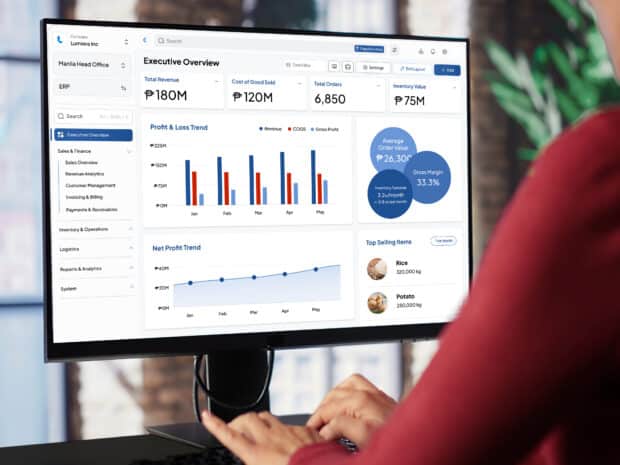
According to CPA Australia’s latest Asia-Pacific Small Business Survey, 69% of Filipino SMEs that invested in technology in 2024 reported improved profitability, which is well above the Asia-Pacific average of 56%. In response to this growing demand, HashMicro’s AI-native ERP platform is developed from the ground up around the way Philippine organizations operate, scale, and grow.
What Years in the Philippine Market Taught HashMicro
Most global ERP vendors entered the Philippine market with platforms built for Western business structures that organizations then tried to adapt. The result is using a software that handles the obvious requirements but misses the nuances: approval workflows that don’t reflect how decisions move through a Filipino organization, compliance modules for BIR, SSS, PhilHealth, and Pag-IBIG treated as afterthoughts, and interfaces designed for desktop-first teams in a market where mobile penetration exceeds 90%.
Beyond the functional gaps, many of these platforms have not seen meaningful updates in years. Teams often work around clunky interfaces, re-entering the same data across modules, or relying on spreadsheets to fill in what the system cannot handle. Workflows are rigid, approvals get delayed, and simple processes take longer than they should.
Over time, these inefficiencies add up. Reports take hours and errors occur frequently through manual workarounds, resulting in teams fixing issues rather than focusing on higher-value work. And when businesses do attempt to close those gaps, the fix typically involves expensive third-party consultants and lengthy customization projects just to make the system workable for a Philippine context.
HashMicro’s years in the Philippine market is what made the difference. Knowing which gaps to close and why they exist reflects an understanding of the local market.
The platform’s approval hierarchies were designed around the reality that Filipino business decisions build from group consensus upward to a final decision-maker. Compliance is built in from the start. BIR deadlines and SSS, PhilHealth, and Pag-IBIG contributions are part of how
the platform operates, so staying compliant happens in the course of normal work and not as a separate process.
The interface was also built for how Filipino teams actually work: mobile-first for a workforce that manages approvals, monitors inventory, and tracks operations on the go, with role-based views, localized workflows, and approval chains that reflect actual reporting lines rather than a generic organizational template.
Doubling Down With AI at the Core
ERP adoption is a problem the industry does not talk about enough. A system gets implemented, the budget gets spent, and six months later half the organization has found a way to work around it because the software never quite fit how they operated day to day. For Philippine businesses that cannot afford to absorb that kind of potential loss, it is a risk worth taking seriously.
HashMicro’s response is baked into the architecture. Hashy AI is not a separate tool or an optional add-on — it runs through the platform itself, meeting users inside the workflows they already navigate and surfacing what they need without requiring them to go looking for it. The learning curve that typically slows ERP adoption flattens considerably when the system is actively helping you use it.
In practice, this means a new employee does not need a week of training to process their first request. A manager does not need to be technically inclined to track where an approval stands. The platform works for the people on it, whatever their role or comfort level with enterprise software.
A Platform Built to Grow With Philippine Business
HashMicro’s full-suite platform covers all core business functions across industries, such as finance, HR, inventory, procurement, and more. It is designed to scale with the ambitions of Philippine businesses. Implementation is handled without the overhead of third-party consultants or drawn-out customization cycles. Because the platform was built for this market from the start, the time between deployment and actual value is significantly shorter than what most Philippine businesses have come to expect from enterprise software. Local support also means the team behind the platform has seen a BIR audit and knows what a Pag-IBIG filing discrepancy looks like.
A global alternative might handle the transaction. However, it is less likely to understand why three departments need to weigh in before it gets approved. For organizations that have outgrown legacy systems or are ready to move beyond disconnected tools, HashMicro offers enterprise-grade capability without the implementation burden or cultural mismatch of global ERP options.
“We have been in this market long enough to know what works here and what does not. That knowledge is in the product; in how the approval flows are built, how compliance is handled, and
how the AI assists real teams doing real work. This is not a platform adapted for the Philippines. It was built for it,” said Ricky Halim, CEO of HashMicro.
Philippine businesses are growing fast, and keeping up with that pace starts with having the right ERP in place. Schedule a consultation or product demonstration with HashMicro today.
ADVT.
This article is brought to you by HashMicro.