


#OpEd: The Discord ban affects freelancers, students, remote workers


Earlier this evening I was trying to send some editorial instructions to our Discord group chat for work. All of these messages didn’t go through. I had initially thought I was in a no-signal zone, but my GOMO eSIM clearly had a 5G signal. Not thinking about it too much I switched to my SMART SIM and the messages went through. “It happens,” I thought to myself. I was at an event and didn’t have time to check social media – because when the time came that I finally did, I saw that Discord had already been blocked by Globe.
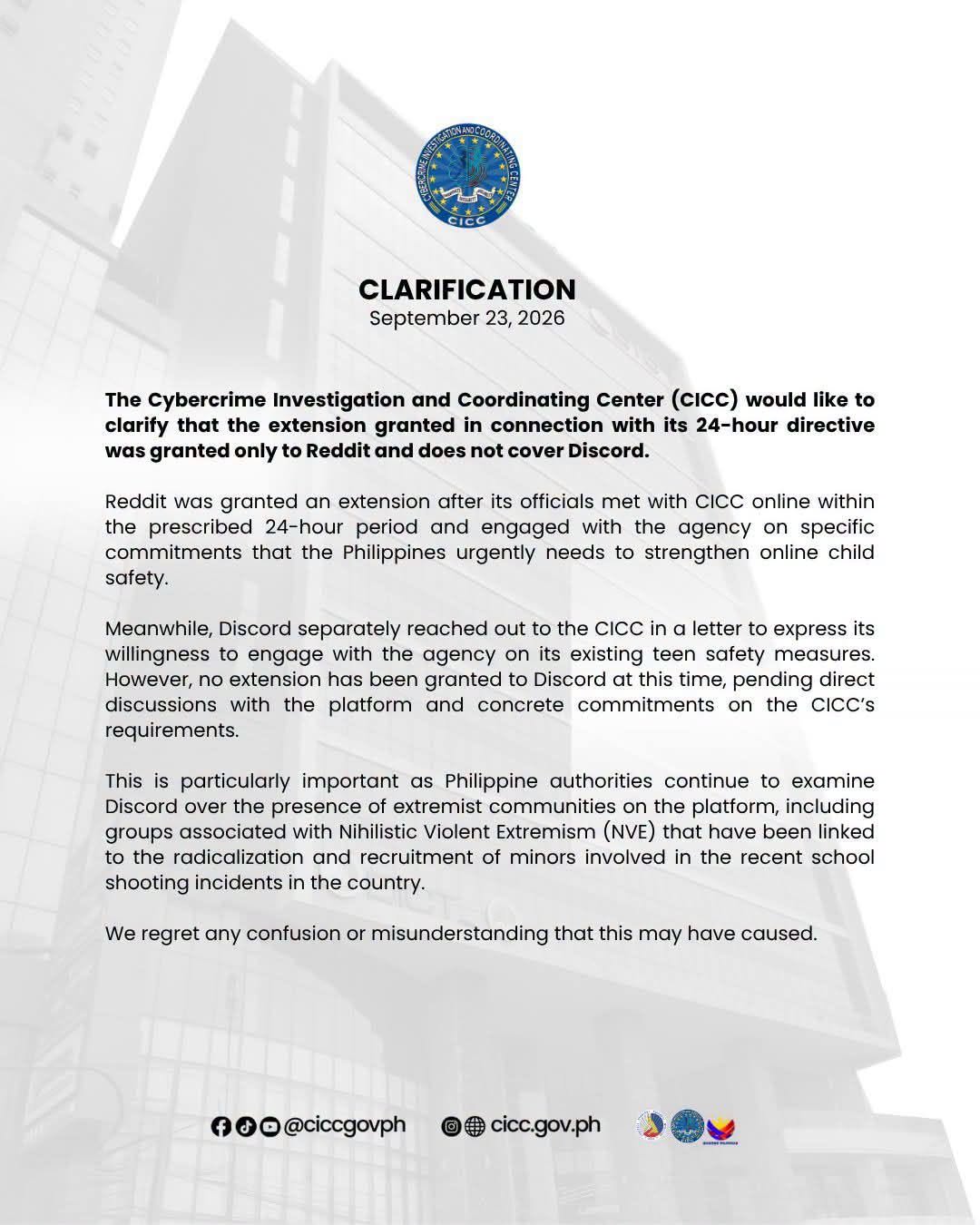
As reported, the CICC had clarified that an earlier mandate to block both Reddit and Discord had pushed through – but only for Discord despite their willingness to engage. The CICC claims that Discord houses extremist groups associated with Nihilistic Violent Extremism and I do not discount that. Such threats do exist and we need to take this seriously. No argument there.
But a blanket ban on Discord with no clear direction also has the following effects:
- Many Filipinos are gig workers who have Discord community management jobs. This is one of the biggest outsourced roles that Filipinos have embraced. In fact, ex-DICT Undersecretary Jeffrey Ian Dy wrote online that the DICT has sacrificed 15,000 Filipino jobs because of the DICT’s failure to apprehend criminals.
- Many Filipinos use apps like Discord as a team chat similar to Slack. Imagine you’re a remote worker logging in at 8PM to work the night shift and all of a sudden you can’t send messages to your team on the other side of the globe? The news of the blanket ban will send a bad signal to companies abroad that hire Filipinos because the calls made are just so unreasonable. The market does not like this type of knee jerk erratic behavior.
- Many students use Discord as a LMS. Despite the availability of Google Classroom and other popular LMS apps like Genyo, Discord has presented itself to be one of the best platforms for online learning because of clear audio, customizable chat rooms, and clear low latency voice chat. Now it’s gone. Where will all the years worth of lessons stored in our kids’ respective channels be found?
Why is the government punishing hard-working citizens by making their lives even harder when in fact there are better, less performative ways to regulate?
Beyond Discord
The House has recently approved the Children’s Online Safety, Protection and Well-Being Act. There are many good things in this bill if it becomes law. The knee-jerk Discord ban however raises a lot of questions when it comes to regulating platforms that will soon include apps like TikTok, YouTube, and Reels on Meta. For instance, there is a provision in Section 19(h) that bans livestreaming and short-form video. These two types of videos encompass a blanket generalization of most of the content on these apps.
What if my child is having online class, and the teacher asks them to turn on the camera for recitation? That is live streaming. What if my child is watching a science or math explainer that is two minutes long? That is short-form video. If we were to apply the law blindly, sites like Khan Academy — one of the biggest resources of online learning would be blocked because of their huge repository of educational videos only because of the delivery mechanism.
Right now I’m trying to figure out how to migrate our entire team chat to a new platform. Facebook? Viber? Heck. I don’t know. Those may get banned too.


