





The success of tablets in the marketplace


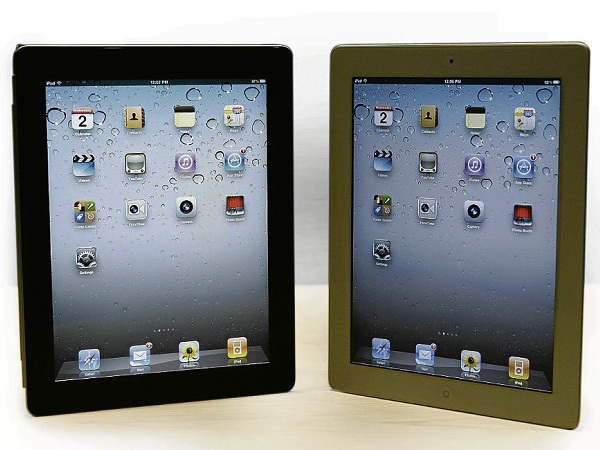
TABLET sales are estimated to account for 11 percent of the global computer market. Above, the much vaunted iPad2.
Alex, an ophthalmologist, reviews the profile of a patient on his iPad before seeing him at Manila Doctors Hospital. To help him determine his patient’s visual acuity, he pulls out a Snellen chart from this iPad and asks his patient to read the letters aloud from a distance, starting with the big letter ‘E’ at the top. Alex shows eye photos from his iPad to explain his patient’s condition before writing out a prescription.
Meanwhile, at home, his wife, Amy, uses her iPad to read her favorite novel, check out new recipes, and connect with her friends on Facebook or Yahoo!Mail several times a day.
Her two small children, AJ and Saki, squeal with excitement as they play Fruit Ninja on their own iPad.
Like Alex, Amy, AJ and Saki, most people use tablets to read documents, flash visual images for presentation, consume multimedia content, and access online communications channels multiple times a day.
In most cases, people regularly visit fewer than 10 sites, among them, a search engine site like Google, a social networking site like Facebook, an e-mail and instant messaging site like Yahoo!, a media site like YouTube, and games like Fruit Ninja.
Laptops, smartphones not up to job
As people continue to access more favorite applications in the Net more frequently, laptops appear to have become too cumbersome to use. Every time one wants to access applications with a clamshell laptop, one needs to lift up the display panel, run the system’s long boot up sequence, connect to the Internet, and, with laptop’s generally limited battery life, plug it into an outlet.
The steps and waiting time involved entail an uncomfortable discontinuity, impatience, and loss of excitement.
On the other hand, while smart phones may be more suitable for frequent online content access than laptops as they are designed to be constantly powered-on and connected to the Internet, all the same, reading content in a smart phone can be painful to the eyes because of the contraption’s small screen size. The ease, convenience and enjoyment experienced derived from surfing the web, checking social networking sites, and playing video games in smart phones are just not the same as in a wider screen device.
The shortcomings of both devices leave a vacuum for spontaneity in terms of content consumption and communications.
Tablets better for content consumption
Tablets are touch-screen mobile PCs that do not come with a dedicated keyboard or mouse. Beyond this physical attribute, however, tablet users know that these cool devices offer something more: an emotional experience that we call spontaneous motion—a pleasant, enjoyable experience owing to a natural and uninhibited flow of thoughts and actions without unnecessary human exertions. The convenience, portability, and simplicity of tablets help create this unique experience.
In particular, a tablet enables a person to immediately satisfy a persistent urge to access content and updates. Like a smart phone, a tablet is constantly powered on, such that consumers can swiftly activate an application with one simple touch of the gadget, anytime they feel like it. The steps involved in operating a tablet are simpler and the waiting time is shorter, leading to undisrupted content experience.
In addition, accessing favorite applications multiple times a day is more enjoyable with a tablet than a laptop. Because it has a wide screen, a tablet displays websites like standard web pages rather than mobile phone-optimized size, leading to a more natural viewing experience.
Lastly, given a tablet’s lightness, its long battery life and notepad design, people can access applications like they can with a mobile phone.
Because of the tablet’s ability to provide spontaneous motion, it has created a new category in the consumer electronics space.
Tablets are now positioned as simple mobile devices that offer the convenience of a smart phone and the functionality of a laptop, especially for people who seek a spontaneous motion experience in content consumption and communication.
In contrast, smart phones give people control, security, and a sense of belonging. They are used for voice communications, messaging, listening to music, and light Internet browsing. For their part, laptops have become central to earning a living in the 21st century, having become indispensable tools for content creation, e.g., reports and graphics, and organizing information.
Tablets—A whopping success!
Today, tablet sales are estimated to account for 11 percent of the global computer market, a significant percentage that goes beyond the size of innovators and early adopters—traditionally the first market segments to adopt a new product before the mainstream market follows. Sales continue to grow as more and more people have signified interest in acquiring a tablet, fueled by the recommendations of those who already have experienced and benefited from the product. This phenomenon is remarkable, in light of the fact that many innovations have failed in the market.
Most new products have remained unpopular because companies that create them tend to overlook the behavior of customers. We hear about status quo bias where people tend to stick with what they have even if a better alternative exists.
In general, people irrationally overvalue the status quo and are often skeptical about a new product. For example, people do not switch between telecom service providers merely because they want to retain their existing numbers, even if they know that another provider offers better service.
In addition, people are naturally reluctant to try out a new product if doing so will require them to change their behavior. The bigger the behavioral change required, the bigger the consumer resistance will be.
Consumers will adapt to new behavior only if the benefits are significant enough to outweigh the hassles of changing behavior. Needless to say, an innovative product offering noteworthy benefits and demanding minimal change in usage behavior is poised to sell exceptionally well in the market.
Tablets have surpassed these two behavioral hurdles. First, owning a tablet does not render ownership of a laptop or smart phone moot or redundant. Instead, it adds value to the gadgets already owned, by functioning as a complementary product rather than as a substitute for either.
Second, a tablet does not require consumers to change behavior, especially if they already have a touch-screen smart phone. Applications in a tablet are chosen the way they are in a touch-screen smart phone: by tapping or swiping icons on the screen. A tablet’s having the functionality of a laptop and the familiar user interface of a touch screen smart phone make it fit seamlessly into everyday behavior.
In the words of Geoffrey Moore, a guru in technology marketing: “Customer use is the starting point for innovation, not customer need.”
The tablets’ ability to provide spontaneous motion experience and ease of customer use is what makes the product such a smash hit.
(Sia is connected with a global consulting firm and Guiang is affiliated with a technology firm. E-mail the authors at marketingmetrics@yahoo.com.)


