





Philippines is first SEA country with satellite-to-phone technology


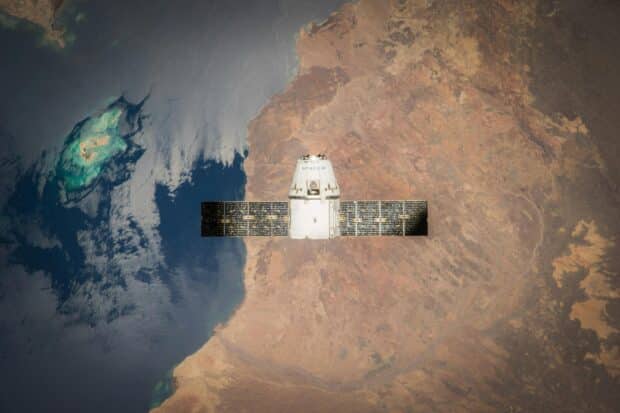
Dead zone no more. The DICT has recently unveiled its groundbreaking partnership between Globe and Starlink, allowing orginary LTE mobile phones access to calls, text, and mobile data without the use of cell towers. Subscribers will now be able to access network connectivity through Starlink’s 650 low-earth orbit satellites.
Through this next-generation technology, ordinary LTE mobile phones will be able to access voice, data, video, and messaging services directly from space, eliminating the need for new devices or ground-based infrastructure. Powered by more than 650 low-Earth orbit satellites, Starlink’s network effectively turns each satellite into a “cell tower in space,” using advanced phased-array antennas and laser-linked systems to integrate with existing mobile networks seamlessly. [source DICT Website]
This new development ushers in a new era of disaster preparedness and resilience. With the country experiencing an average of twenty tropical cyclones every year, communications infrastructure for relief remains vulnerable. With this new satellite-to-phone technology, signal will never be lost due to infrastructure damage.
“This partnership will usher the Philippines into a new era of connectivity, especially for our unserved and underserved communities, and will be critical in times of disasters when communication can mean the difference between life and death,” said DICT Secretary Henry Aguda. “We will continue to support and welcome investments that expand access and ensure that no Filipino is left behind in the digital age.”
Alongside Indonesia, the country has been identified as a key market in the rollout of satellite-enabled 4G/LTE connectivity, positioning the Philippines as a critical testbed for where mobile networks simply can’t reach today. Initial testing and proof-of-concept deployments are expected in the first half of 2026, with a clear focus on remote islands, mountainous regions, and disaster-prone areas that remain outside the footprint of traditional cell towers.
What makes this development particularly significant is Globe’s scale. In 2026 alone, Globe is investing at least USD 1.0 billion across infrastructure, network expansion, and digital platforms, alongside an existing base of 63.1 million subscribers.
Globally, these Direct-to-Cell services are already gaining traction. Major mobile operators in the United States, Australia, Canada, New Zealand, Japan, Switzerland, Chile, Peru, Ukraine, and the United Kingdom have begun adopting similar technologies. The Philippines now joins that growing list.


