





How technology changed investing and trading


[Disclaimer: This article is intended for US audiences]
Investing used to move a lot more slowly. Access to markets was limited, trades required human intermediaries, and information travelled through newspapers, television or scheduled reports. Participation often depended on who you knew or which financial institutions you could reach. For many individuals, investing felt distant, complex and reserved for professionals.
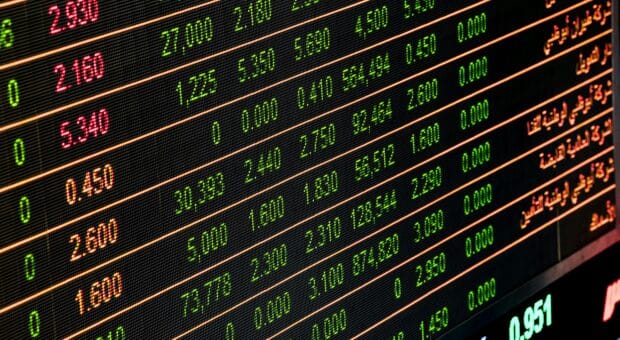
Technology has changed that. Digital platforms, mobile apps and data infrastructure have reshaped how people research, execute and monitor trades. What was once procedural has become immediate. What once required a phone call to a broker can now be completed in seconds on a smartphone.
It isn’t just about convenience. It shows a bigger change in access, behaviour, risk perception and the function of financial intermediaries. Understanding these changes can help you to not only understand the industry more but also use these advancements to your advantage.
The older model of market access
Before widespread internet adoption, retail investors interacted with markets through more formal channels. A typical process involved contacting a broker, discussing an order and waiting for execution. Delays were normal, pricing information was not always real-time and research tools were largely institutional.
This structure created several natural constraints:
- Higher friction in trading: Executing transactions required deliberate action, which often reduced impulsive decisions.
- Information bottlenecks: Market data was available, but rarely continuous or interactive for individual investors.
- Clear intermediary roles: The broker acted as both gatekeeper and advisor, filtering information and facilitating trades.
While this model limited speed and accessibility, it also imposed pacing. Investors had fewer stimuli and fewer opportunities to react instantly to market noise.
Digital platforms and the removal of friction
Online trading platforms changed the mechanics of participation. Execution speed increased, interfaces simplified order placement, and data feeds became continuous. Mobile technology further reduced barriers, allowing market access from virtually anywhere.
Several developments stand out:
- Instant order execution: Trades that once required manual handling are now processed electronically. The practical delay between decision and action has largely disappeared.
- Real-time information flow: Price movements, charts, news, and analytics are available without interruption. Investors no longer wait for scheduled updates.
- Lower participation thresholds: Minimum investment sizes, fee structures, and onboarding processes have shifted, allowing broader retail involvement.
These changes did not eliminate the broker, but they changed expectations. Instead of being the sole channel to the market, the broker increasingly became one option within a larger digital ecosystem.
How investor behaviour has changed
When trading becomes faster and more accessible, investor behaviour rarely stays the same.
- Frequency of engagement increasesInvestors can monitor positions continuously, which often shortens decision cycles. Price movements that might once have passed unnoticed now trigger immediate responses.
- Perceived control becomes more pronounced: Interactive dashboards and analytics tools can create a sense of precision. Yet underlying uncertainty remains, and more data does not automatically produce better judgment.
- New forms of stimulus influence attention: Notifications, trending assets, and social channels constantly compete for focus. Investors are exposed to a larger volume of signals, many of which carry limited informational value.
These shifts subtly alter the relationship between investors and expertise, as a broker may still offer guidance but no longer controls the primary flow of information.
Persistent misunderstandings about technology and markets
Despite technological progress, some assumptions about modern investing deserve closer scrutiny.
- Access does not guarantee understanding: Digital tools make participation easier, but they do not automatically improve financial literacy. Complex instruments remain complex regardless of interface design.
- More data does not eliminate risk: Continuous information can reduce uncertainty in specific moments, yet markets remain inherently unpredictable. Precision in display should not be confused with predictability.
- Automation is not infallible: Algorithmic systems and smart order routing improve efficiency, but they operate within programmed parameters. Unexpected conditions can still produce unexpected outcomes.
These misunderstandings are not unique to retail investors. Rapid technological adoption often creates optimism about accuracy and control, even in probabilistic environments like financial markets.
The evolving role of the broker
Technology has not made brokers obsolete, but it has changed their function. Instead of acting primarily as transaction facilitators, brokers increasingly operate as service providers within digital infrastructures.
Their relevance now often centres on areas such as:
- Market interpretation rather than raw access
- Risk management and portfolio structuring
- Navigation of regulatory and product complexity
- Execution strategy for larger or specialised trades
At the same time, digital brokerage models have emerged, blending automation with varying levels of human support. The distinction between platform and broker is less rigid than before. This evolution reflects a broader pattern seen across industries. Technology reduces mechanical tasks while increasing demand for contextual judgement and specialised expertise.
Why these changes matter beyond convenience
The transformation of investing mechanics carries wider implications. Faster execution and constant information flows can amplify volatility in behaviour. Reduced friction can encourage experimentation, but also increase exposure to poorly understood risks.
Market participation has broadened, yet the cognitive demands on investors have also expanded. Individuals must process more information, make quicker decisions, and manage psychological pressures associated with continuous monitoring.
Technology, therefore, acts as both an enabler and a stressor. It expands opportunity while altering the environment in which choices are made.
A continuing transition rather than a completed shift
It is tempting to view digital investing as a finished transition, but the landscape continues to evolve. Artificial intelligence tools, predictive analytics, and interface design will likely further reshape how investors interact with markets.
What remains consistent is the underlying challenge. Markets still require interpretation, discipline, and risk awareness. Technology changes the tools and tempo, but not the fundamental uncertainties.
ADVT.
This article is brought to you by Bazoom Group ApS.


