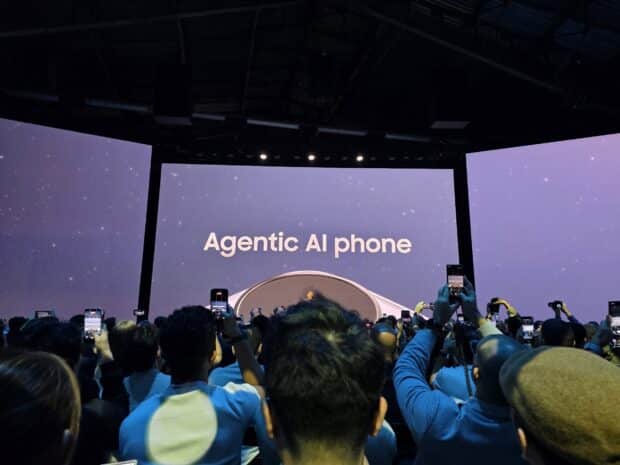
SAN FRANCISCO, California – AI is no longer just a feature buried inside a settings menu. It’s fast becoming the operating layer of modern smartphones that is powering search, editing photos, drafting messages, and quietly anticipating what users need next. Today, Samsung framed the new Galaxy S26 series as “the agentic phone.“
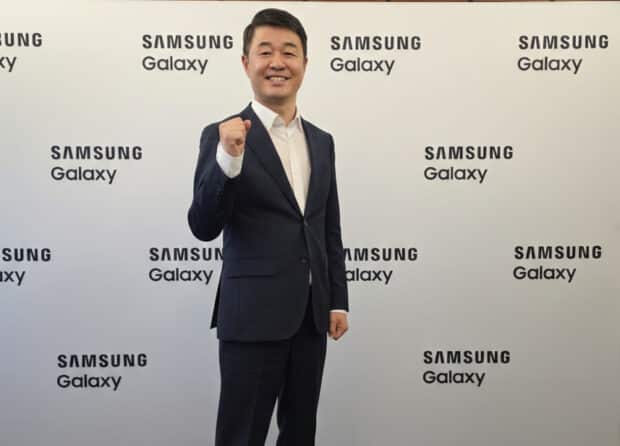
In an exclusive interview with INQUIRER.net, CU Kim, President & CEO of Samsung Electronics Southeast Asia & Oceania, outlined how the company sees AI shaping the Philippine smartphone market — and how it plans to stay competitive amid rising memory costs.

As global demand for high-bandwidth memory (HBM) continues to surge — largely driven by AI data centers — the ripple effects are reaching consumer electronics. RAM pricing pressure is real, and smartphone manufacturers are navigating tighter margins just as users expect more intelligence built into their devices. It’s a lot of give-and-take with the very features people want that’s driving up the cost of the AI industry.
It’s against this backdrop that Samsung is launching the Galaxy S26 series, positioning it not just as a flagship refresh, but as what it calls its “third-generation AI phone.”
“AI is becoming an essential part of how people navigate their day,” said CU Kim, President & CEO of Samsung Electronics Southeast Asia & Oceania, in an interview. “We are committed to AI democratization — helping more people enjoy its benefits in their daily lives with minimal effort.”
According to Samsung’s internal data, eight in ten Filipino users of Galaxy AI-powered devices are already using AI features regularly. The most popular tools locally include Circle to Search, Generative Edit, Instant Slow-mo, and Writing Assist — a sign that Filipinos gravitate toward content creation and practical productivity enhancements rather than abstract AI experiments.
Kim noted that across Southeast Asia and Oceania, consumers cite convenience (52%), task automation (48%), and simplifying complex information (46%) as primary reasons for purchasing AI-powered devices.
The Galaxy S26 series leans into that idea by shifting from what Kim describes as a “capture-centric” smartphone to a more “result-centric” experience. The upgraded Photo Assist suite now allows users to describe their desired photo edits in natural language, with adjustments previewed in stages rather than delivered as a final, irreversible output.

“Edits can be made continuously and reviewed at each step,” Kim said. “It makes the process feel fluid and not final.” Samsung was able to showcase actual demos where generating and editing a photo project felt more like a conversation with a graphic artist than a one-time edit.
Samsung is also introducing what it calls more “agentic” intelligence — proactive suggestions designed to reduce app-switching. One example is Now Nudge, which can surface relevant photos when someone asks about a recent trip, removing the need to manually search through albums.
These are incremental changes, but they reflect a larger strategic shift: smartphones are moving away from app-first navigation toward outcome-driven assistance.
The bigger question, however, is whether rising hardware costs — particularly memory — will reshape pricing across the premium segment.
Samsung’s answer is lifecycle value. “Samsung manages pricing by focusing not only on the launch price but on the overall value customers receive throughout the life of their device,” Kim said. The company is emphasizing long-term software support, offering up to seven years of OS upgrades for Galaxy S devices and six years for Galaxy A models. Core Galaxy AI features under “Advanced intelligence” are also provided at no additional cost and continue to expand via software updates.
In an era where AI capability increasingly depends on memory headroom and compute efficiency, vertical integration gives Samsung a structural advantage. As one of the world’s largest memory manufacturers, the company is better insulated than many competitors from supply-side shocks.
On the hardware front, Samsung has also addressed one area where it has historically been conservative: charging speeds.
“As user behavior continues to evolve, including more intensive daily use and greater reliance on AI-powered features, we’ve refined our charging technology,” Kim said. The Galaxy S26 Ultra’s Super-Fast Charging 3.0 can reach up to 75 percent in around 30 minutes — an overdue upgrade in a market where C-brand competitors have aggressively pushed faster charging for years.
Perhaps the most distinctive addition, however, is the new built-in Privacy Display on the Galaxy S26 Ultra — what Samsung describes as pixel-level on-screen privacy protection.
“People today use their phones everywhere — trains, lifts, cafes,” Kim said. “This protects against shoulder surfing without compromising everyday viewing.”
The feature allows users to customize privacy levels per app or task, building on Samsung Knox security architecture. It’s a subtle innovation, but one that acknowledges how mobile computing has shifted into public, shared spaces.
The Philippine market, Kim described, is “dynamic,” with tech-savvy consumers who increasingly factor AI capability into flagship purchase decisions. The company is betting that meaningful AI integration — rather than headline-grabbing specs — will define leadership in this next cycle.
The reality is that AI will continue to reshape the economics of devices, from memory pricing to software support commitments. For consumers, that means smarter phones — but potentially fewer truly “budget” flagships in the long run.
The Galaxy S26 series arrives at a moment when intelligence is becoming expected. It’s essentially a framing problem where in the past, the hardware spoke for itself: better cameras, faster processors, and bigger storage. It’s very different today, as the upgrades are mostly from the software side, from agentic functions, generative edits, and AI processes that save battery life.