LAPU-LAPU CITY, Philippines — Filipino singer-songwriter and content creator Mona Gonzales (also known as simply MONA) took to social media after discovering that AI influencers were allegedly using her voice.
In a Facebook post released on Tuesday night, March 17, 2026, MONA publicly raised concerns over the alleged unauthorized use of her voice in AI-generated content across several social media platforms.
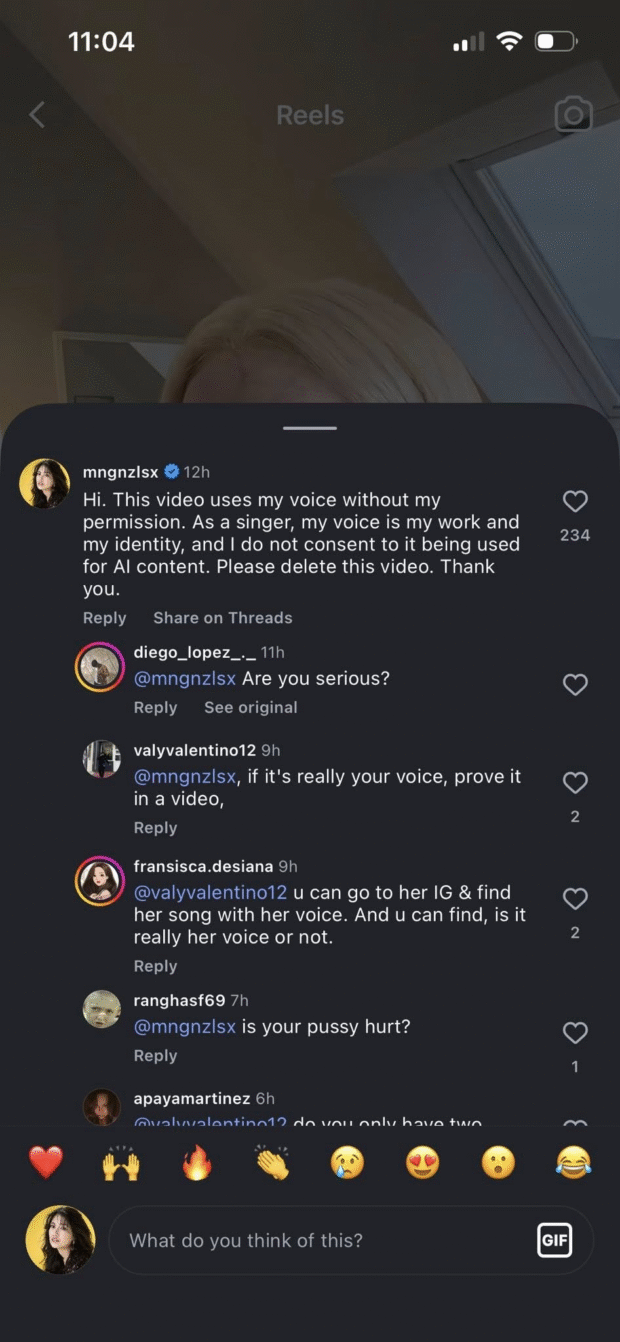
“There are several accounts on Facebook, Instagram, and TikTok that have been using my voice in AI-generated videos without my permission,” MONA shared to her followers.
One of the alleged AI influencers, Lina Glass, has nearly 60,000 combined followers across both Instagram and TikTok. A quick look through her content reveals multiple instances where MONA’s audio seemingly appears to have been used.
Glass’s videos allegedly features audio from MONA’s cover of “Blue Bird,” a song known as an opening theme for Naruto Shippuden. At the time of writing, the video had garnered around 170,000 likes.
In her post, MONA emphasized that while she recognizes the growing popularity of artificial intelligence in content creation, she believes using someone’s voice without permission is a violation of personal and professional boundaries.
“As an artist and a professional singer, my voice is part of my identity and something I have worked very hard to develop over many years,” MONA expressed in her Facebook post.
“Because of that, I believe I have the right to set boundaries when it comes to how my voice is used,” she continued.

Ignored, blocked, gaslit
As revealed in the same post, MONA tried to privately resolve the issue with these AI influencers.
However, instead of taking down their videos, MONA was then ignored and even blocked by one of the accounts.
One of the accounts, TakabaAMV, argued that deleting their videos would affect their page’s likes and reach. Instead, they offered to retroactively credit MONA, hoping to boost her reach as well.
Adding fuel to the fire, a different account, @said.me.angel on Instagram, privately messaged MONA to take it on the chin and view this situation as flattery.
“You should be proud that so many people use your content. It’s the beginning of being viral, @said.me.angel told MONA, as revealed in a screenshot of their conversation.
No copyright infringed (for now)
Unfortunately, the Philippines has yet to pass any AI-specific laws in the country, including those that concern copyright protection.
That said, MONA tried reporting these alleged AI influencers on their platforms. However, MONA revealed that the platforms found no violations and thus no actions were taken against these AI influencers allegedly using her voice.
MONA’s issue is just one of the many incidents in which artists’ voices were non-consensually used. This highlights a growing concern among artists and creators like MONA as AI tools become more advanced, raising questions about consent, ownership, and ethical use of digital likenesses.
“I normally prefer to stay quiet about situations like this, and in the past I have tolerated worse without speaking up,” MONA expressed.
“But this time I felt it was important to draw a clear boundary.”
As of this article’s writing, Tech INQ has reached out to the alleged AI influencers regarding their side of the story, but has yet to receive any response.