Review Note: This review is for an early access version of Fallen Tear: The Ascension and is not yet reflective of the final product.
Fallen Tear: The Ascension is a familiar but stylishly executed Metroidvania adventure.
Wake up, sleepy head!
Fallen Tear: The Ascension begins with the most classic of JRPG beginnings: a young boy being woken up by his mother because today is going to be a big day.
The opening scene sets the tone for the game. It’s the first of many familiar touches in the title.
Fallen Tear is not a JRPG, though. It’s a side-scrolling semi-open world action adventure game, or more colloquially, a Metroidvania. It embraces the familiar structure: sprawling exploration, ability-gated progression, and constant backtracking through an interconnected world. The game is presented in a gorgeous hand-painted art style and features expressive traditional frame-by-frame animation, making it an experience worthy of the price of admission, even in its Early Access state.
Get equipped with double jump
The expanding set of verbs available to Hira, the protagonist, is composed of the greatest hits. Soon after learning how to wall jump and wall slide, Hira also gains the ability to double jump and dash. Yes, there is an air dash as well.

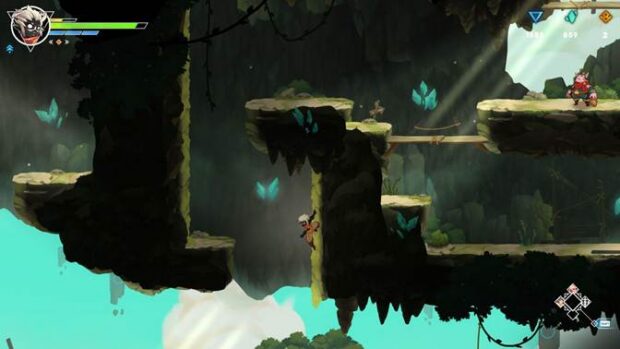
What’s unique, though, is how Fallen Tear brings in inspiration from all sorts of other games to form its main mechanics. New moves are learned by forming Fated Bonds, which are characters that the player meets and recruits over the course of the story. These Bonds come with their own moves—summonable à la support characters in a Capcom Versus game—and they can be leveled up in a Persona-like manner by completing collection and progression tasks that are unique to each character. Similar to how Suikoden works, they also move into the player’s home base, the Temple of Oras, once they are recruited.
One of the first Bonds that Hira recruits is the Guildmaster of the Hunter’s Guild, who opens up a whole new progression track in the game. Towns are scattered throughout the world map (in a manner very reminiscent of Castlevania 2, for the older gamers out there), and each town features a hunter’s bounty board. Accepting and completing these hunts for unique monsters will allow Hira to purchase enhanced versions of his attacks from the Guildmaster, like a longer attack combo string and a slash that can be performed mid-dash.
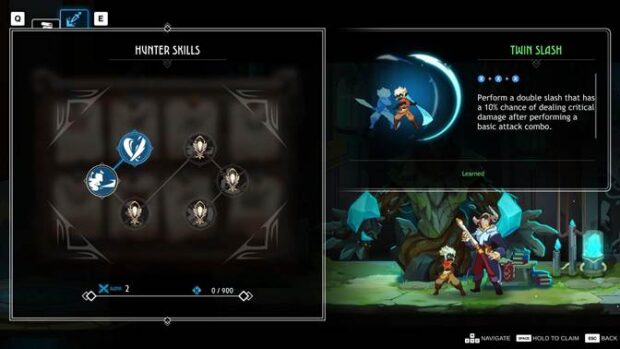
These moves expand Hira’s traversal options and open up more of the map for exploration. It’s a tried and true progression mechanic, but one implemented with a notable savviness not just for the Metroidvania genre, but also beyond.
Fallen Tear is also a pleasure to play, thanks to its smooth, responsive controls. The character animations are hand-drawn and done frame by frame. It takes a lot of care and understanding to make traditional animation work well with a dynamic video game, and Fallen Tear makes it look easy. Hira’s movements are snappy and immediate, making the player fully responsible for how well they’re doing.
How lost is too lost?
While its progression mechanics draw from a diverse set of sources, Fallen Tear’s moment-to-moment gameplay is pure modern Metroidvania design. It plays very much like Hollow Knight, even down to the traversal puzzles involving twisting spiked corridors and its mana-based healing mechanic. In fact, it leans too heavily on the Hollow Knight blueprint.
The combat balance also feels unfinished. There’s a dive-and-bounce move that Hira can perform right from the start of the game that, with a little practice and concentration, can be used against more powerful enemies without having to upgrade his stats and skills to an appropriate level.
The biggest issue with Fallen Tear at the moment is how its signposting rapidly falls off after the first hour of gameplay. The introductory section guides the player through learning the basic verb set of the game while serving up a lot of expository dialogue, but these both disappear at an alarming rate after the player completes the initial quest and is let loose to explore the world. There is a point in the game where all avenues of further exploration will seem closed off to the player, and not enough hints are provided to nudge them in the proper direction of the next unlock that they need. It’s frustrating for a game of this scale. At any moment, there can be five or more possible routes that are all visible, but inaccessible. A little more guidance would go a long way at these points of the game, and will most likely be provided as the developers continue working through its Early Access state.
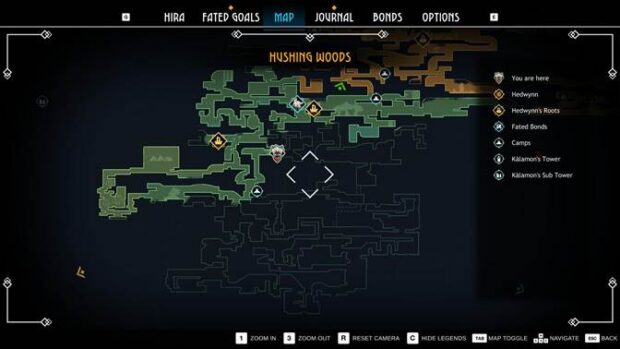
Getting lost is a key feature of Metroidvanias, but there’s such a thing as getting too lost. Fallen Tear’s current build keeps the player in that state for far too long.
The portable experience
The handheld experience is worth a mention. Fallen Tear sounds like a perfect game for portable gaming, and for the most part, it works well. A Steam Deck can sleep and resume at any point in the game with zero glitches. The game syncs its saves seamlessly with Steam Cloud. The controls also map perfectly to a traditional controller setup, although a mouse and keyboard scheme is also available.

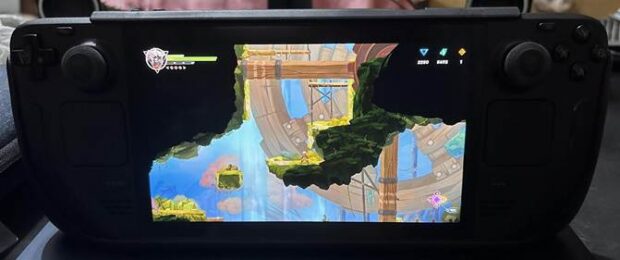
The current Early Access build is not built with portability in mind, though: there’s no way to increase the font size, which is small enough to be uncomfortable when viewed on a smaller screen. The game’s performance on a Steam Deck is inconsistent, with noticeable frame dips in sprawling areas where the camera pulls back for a wide shot, or in areas with a lot of dynamic lighting effects. This is surprising for a 2D game, and it’s fair to expect a lack of optimization with the game still in Early Access.
Outside of those moments, the game performs nicely on the Deck and runs at 60 fps. It also supports an uncapped frame rate, and moves beautifully on a decently-powered machine.
Filipino-developed, but not Filipino-themed
Fallen Tear is being developed by Winter Crew, a Philippines-based game dev studio. Fallen Tear is the team’s first original video game, although its members have plenty of experience working on games for clients overseas. The theming is not overtly Filipino, which is frankly refreshing in a space saturated with mythology- and folklore-based projects. Instead, Fallen Tear’s world of Raoah is more of a generic fantasy world with tech flourishes of the glowing-lines-in-the-stonework variety. None of the characters have irises or pupils in their eyes. This may be initially off-putting, but the aesthetic does help the setting stand out.
The game also features a sweeping orchestral soundtrack, and some very good voice acting. Only key story exchanges are voiced, but all the performances are exceptional.
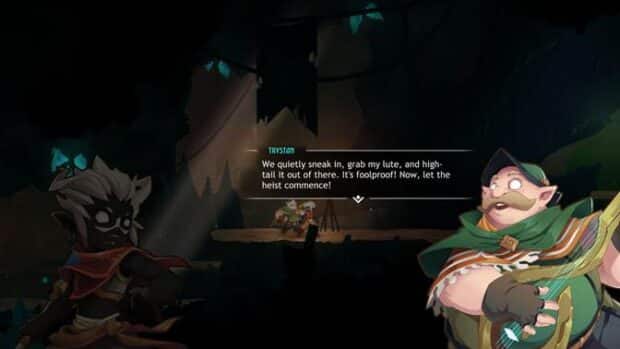
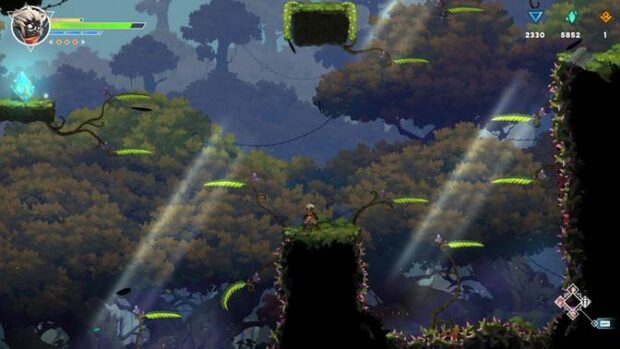
Pinoy players who pay close attention will find nods to the developer’s roots. The Temple of Oras and its tree-like denizen is a clear homage to Zelda’s Temple of Time and the Great Deku Tree. The forest areas also feature leafy platforms that temporarily curl up and become unusable a moment after they are touched. These are makahiya leaves!
The game is still being worked on, and there’s no set date for when it leaves Early Access yet. It’s still rough around the edges in its story progression, and it feels a little generic when it comes to setting and gameplay, but the fantastic art, the finely-tuned controls, and the blending of inspirations from games of other genres make it worth a look.
During its best moments, Fallen Tear overcomes nearly all of its shortcomings. The artistry, responsiveness, and sheer sincerity of its design all point toward something that could become very special.
Fallen Tear: The Ascension is currently in Early Access on Steam.