I want a Switch 2. I have wanted a Switch 2. I know all the criticisms–I have watched countless hours of YouTube debates. I already have a Switch. And a Steam Deck. But I want a Switch 2. This is a problem.

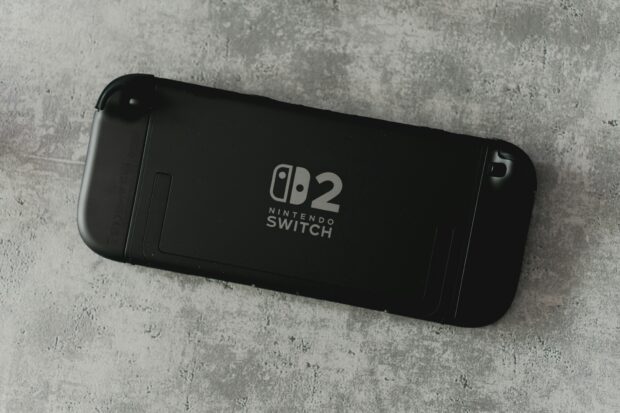
Do you have the same problem? If not, then you can move along. But if you’re thinking about this in the face of the RAM scarcity, energy crisis, war in other parts of the world, the shooting at the senate (fresh in the moments that I am writing this), and everything else, and you are weighing your options, then join me in trying to figure this out. Because I know that it might seem irresponsible when perhaps the more mature thing to do is to save money and hold on to liquid assets in the possibility of things getting even worse than they are now.
BUT THE PRICE OF THE SWITCH 2 WILL GO UP SOON! Playstation 5 prices already went up, when historically console prices are supposed to go down!
That’s the battle that is happening in my mind right now. It became clear to me that I was not smart enough to answer this problem myself. So I asked an economist. JC Punongbayan is an Assistant Professor at the UP School of Economics and author of the book, False Nostalgia: The Marcos “Golden Age” Myths and How to Debunk Them as well as an upcoming textbook on Macroeconomics. He brought this academic background and his own gamer perspective to our conversation.
The Microeconomics in my desires
I gave him the exact same brain dump of the previous paragraphs, and even though I might have sounded a little crazed, he laughed it off and explained to me that my thought loop was actually a rational economic debate. He explained that what I was wrestling with was an example of Consumer Choice Theory.
JC explained it, “”You have the notion of utility or enjoyment, you want to maximize your utility or your enjoyment or happiness…subject to certain constraints.” Basically, we want to get the most bang for our buck, and we have to weigh that against all the other things in play. He says I am being rational in wanting to maximize the happiness I could get and weighing it against all of the other concerns, opportunities, and responsibilities.
It’s here where we run into another economics concept, the thing we all probably learned in basic economics classes: opportunity cost. JC explains further, “The cost of your Switch 2 is not just the price tag but also its opportunity cost or the implicit cost of it. So in other words, what’s the value of the other thing that you could be spending the money on?”
I start enumerating things like gas costs, electricity bills, groceries, as well as trying to be an adult and setting aside money for the future. Of course the ability to imagine the future is constrained by current geopolitical instability, i.e. if the world is burning, YOLO on the things we want to buy. And it’s going to be this constant calibration where we are measuring up the available money, the utility or enjoyment the purchase can give us, and all of the other things that the money could be used for.
But JC says if I can foresee that my purchase of a Switch 2 is something that I can afford, and it’s something that will bring me sufficient joy, then it’s a justifiable purchase. We add in the fact that I won’t be the only player, but that my wife would play too. JC tells me that he shares consoles with his boyfriend, so not only does he derive his own joy from playing, but he also derives joy from his boyfriend playing. The case would be the same with me, since I would share with my wife.
The decision is starting to get easier. In my head, with the idea that there’s personal enjoyment, my wife’s enjoyment, and the joy I would also derive from my wife enjoying the console, then it starts to be justifiable. But wait there are more things to consider.
Zooming out to look at the Macro
One of the reasons why I started to think about getting a Switch 2 now as opposed to waiting was the announcement of the coming price increase. I was ready to wait until Christmas and see if there would be sales or deals, but the increase got me thinking.
I ask JC about this because knowing how much more something will cost in the future will make us change our behavior. JC explains to me that this is actually something we have been witnessing, as every week since the US-Israel war on Iran and the energy crisis, we have been seeing people lined up at gas stations.
He explains it’s going to be the same kind of thinking for anyone buying a Switch 2. “Your mere expectation of the price increase rather than the price increase itself, or what you think the price will be in the future, is a huge consideration in economics. But if everyone thinks that way, then the demand for the good increases now… So it’s a self-fulfilling prophecy.” It’s here that this sounds almost like a Catch-22, by thinking that the price will increase soon, it moves us to action to buy now, but buying now would then create a shortage now, which could then lead to the prices increasing now rather than later. I put on my Tin-Foil hat and came up with a conspiracy theory that Nintendo is making this announcement to juice sales now since they are dealing with a backlash. Then I take off the hat and go back to talking to JC.
We turn to look at the cost of goods going beyond the Switch 2. JC explains one way to look at the price increases, “The latest inflation increase, Carl, it is felt more in food… Fertilizer costs which have increased a lot, and then therefore rice prices have increased, apart from vegetables, fish, etc.”
This means that I don’t just have to consider the price of the console against my current budget, but I have to consider what inflation will do to the cost of goods like groceries. It’s not just the price increase from Nintendo I need to be bracing for, but the fact that all the other, more immediate goods will cost more. That’s got me thinking about the rising electricity costs that we are all bracing for, alongside the fluctuating gas prices again. The macro impacting the micro decisions of our lives.
JC throws in one other thing to consider, which is exchange rates and what the prospects of the Philippine peso are. “The peso has slid to past 61 pesos per dollar already. So that means that anything we import, including oil, including Switch 2 consoles, will become expensive. By the way, the expected trend is a further depreciation or weakening of the peso in the coming months.” That means it’s not just the increase in price of the Switch 2, but what that price increase might translate to given the value of the peso.
So it looks undeniable that the Switch 2 is going to cost a significant amount of money, and that there are advantages to buying now before the price increase hits. But then the opportunity cost and implicit cost still give me pause, especially if we need to buckle up for a bumpy economy.
The Decision or Lack Thereof
I don’t think that JC realized as I conducted the interview that I had another tab in my browser opened to a page with the pricing of the Switch 2. And I waffled back and forth, thinking yes, this is the moment to decide, or no, it’s not the right time you should wait until everything feels a little more stable. We talked more ideas, like paying cash or getting it on credit to distribute the cost. Like I could lock in the price to what it cost now, but pay it over time.
However, more economics concepts and more information did not mean that the decision was getting easier. That’s because economics is a way of analyzing and understanding things, but ultimately, we need to make our decisions for ourselves and what will maximize our utility. I wanted JC to give me a formula that would make this make sense.
Instead, what became clear to me that while there are things that we can easily identify, like prices, costs, projected demand, inflation, and all these things, there is something that I would need to put a value on. That’s the value of enjoyment. What joy could I (and my wife, and any friends who might also play) get from us having a Switch 2 now? There was no way for me to quantify that.
JC tried to give me a measure, “ “If you think that you will occasionally or even frequently use it, then that’s the value. It’s not necessarily enjoyment, but it can be as simple as how often you can get to use it. Each session of gaming will give you a utility.” So it’s, will I use it, and will my use of it give me that “utility” of games. That utility in the long run being worth the current price tag vs. what the perceived future price tag will be.
In the end, I got some economics ideas and tools to approach my decision in a more rational way. But I still have to make that decision.