





Pokemon GO players learn they trained delivery bots


LAPU-LAPU CITY, Philippines — A collective part of the Pokemon GO players on the internet just learned Pokemon GO has apparently used player-generated game data to train delivery bots.
This comes after Niantic Spatial — formerly Niantic Inc., former developers of Pokemon GO prior to selling the game to Scopely — revealed that the company has partnered with Coco Robotics as revealed in an announcement back in March 10, 2026.

The collaboration between the two tech companies brings together Niantic’s geospatial intelligence platform with Coco’s growing fleet of delivery robots. This signals a push toward more precise and autonomous logistics in urban areas.
“Niantic Spatial will be a core infrastructure partner for Coco, deploying spatial AI and its Visual Positioning System (VPS) to further enhance the company’s advanced robot delivery fleet,” Niantic Spatial’s announcement reads.
How Pokemon GO fits into the picture
In Pokémon GO, players have long been able to scan real-world locations through the game’s Augmented Reality (AR) Mapping feature.
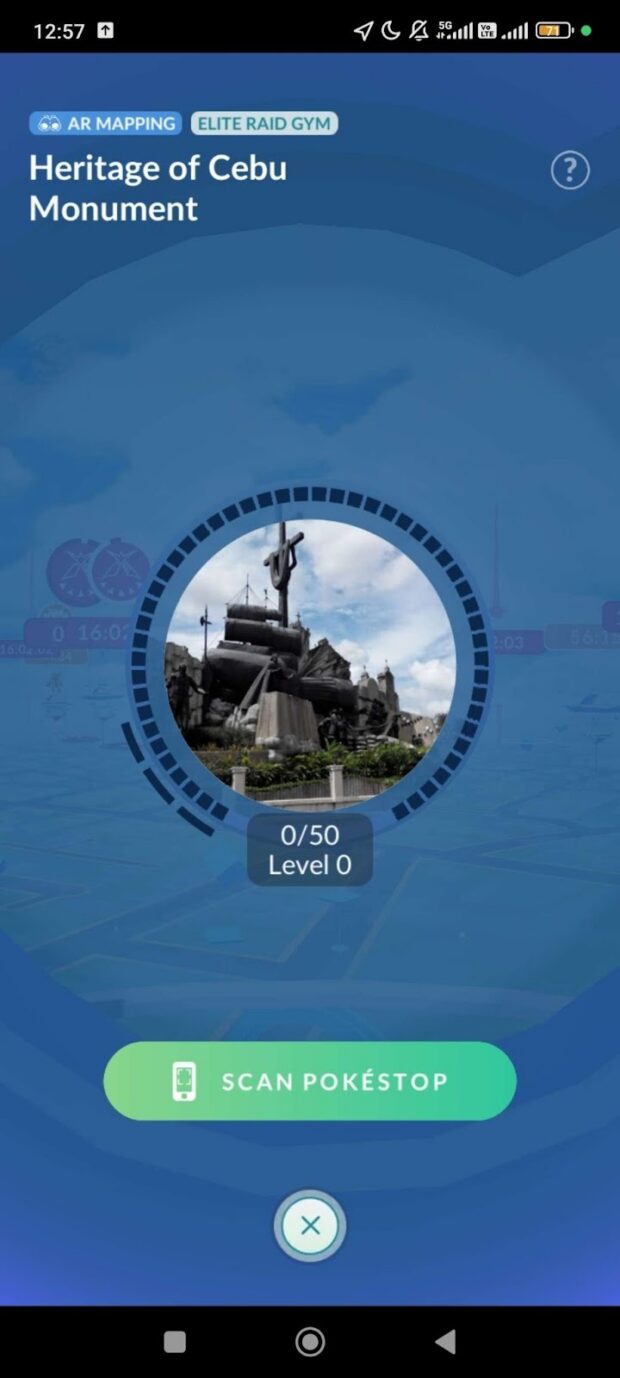
By scanning nearby PokéStops and Gyms, players can earn rewards such as Poffins, Poké Balls, Great Balls, Ultra Balls, and Max Revives, while also powering up those locations for two to three days to grant bonus items to all Trainers who spin them.
But beyond the in-game perks, these scans also help build the dataset behind Niantic Spatial’s Visual Positioning System (VPS), which the company says is used to address “some of the hardest problems in urban robotics.”
“We’re excited to bring the Niantic Spatial and Coco Robotics engineering teams together in this unique design partnership. It gives us reliable access to localization services that further improve robot navigation,” said Zach Rash, co-founder and CEO of Coco Robotics.
“Looking ahead, we’ll jointly explore new ways to enable Coco’s robots to operate with increasing safety and autonomy in any city,” he added.
So, how exactly do players go about collecting real-world data in Pokemon GO?
First, players must locate a PokeStop or Gym and must be in its vicinity. After that, players can tap the ‘>’ button from the upper right corner near the PokeStop or the ‘+’ button for Gyms.
Then, players can tap the ‘SCAN POKESTOP’ button to initiate the AR Mapping system in Pokémon GO.
Afterwards, players must take a brief continuous video of the PokeStop or Gym, keeping the subject inside the frame, whilst walking around it.
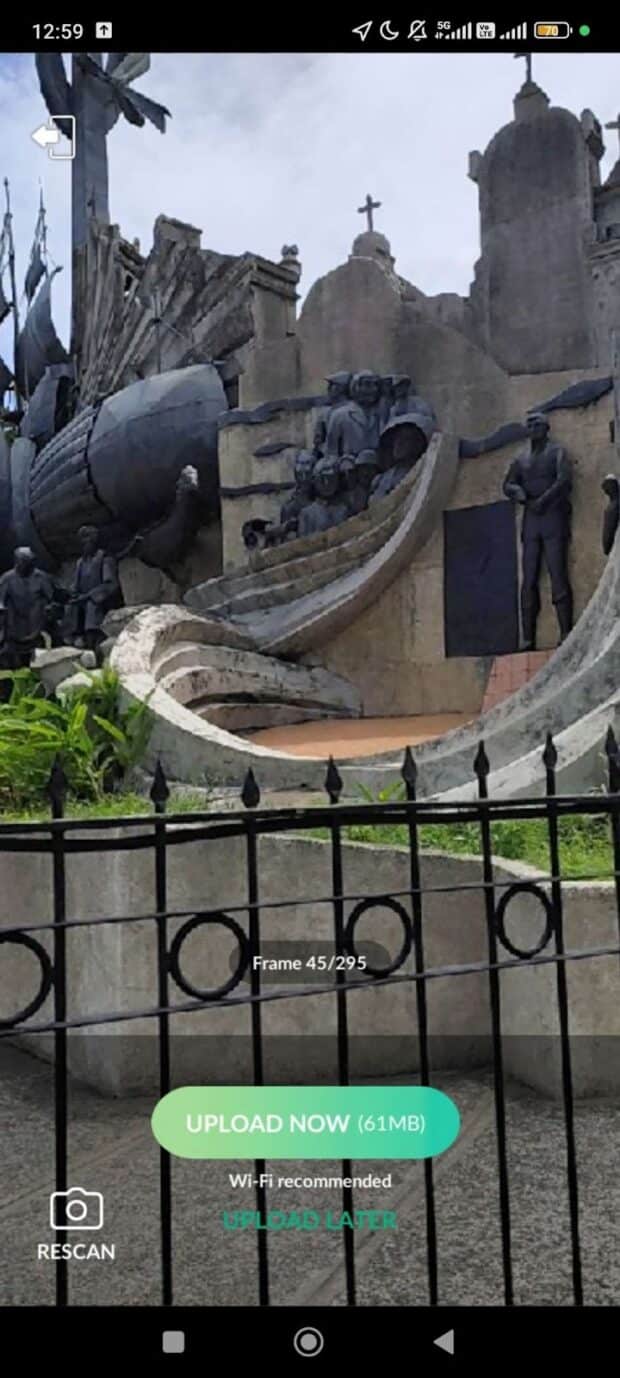
Once done, players can then submit the scanned data to the game’s server, which then grants players their rewards and boosts.
It should have been obvious
The idea that everyday gameplay in Pokemon GO may have indirectly helped power commercial robotics systems has prompted both intrigue and debate across online communities.
For instance, a lot of players pointed out how this wasn’t surprising at all.
Reddit user “Spyke333” said in a forum, “Anyone who thought the AR task was there for anything other than collecting real world data is oblivious to the real world. I fully expected it and I’m sure the data is being used for so much more than just training robots/AI.”
Additionally, Reddit user “Datguysadz” stated, “[Niantic] was always a data gatherer first and foremost, they were just able to come up with a fun way of doing so.”
Meanwhile, Vincent Dior Villanueva, a player who has played the game since its cultural release in 2016, said it was obvious from the game’s design that Pokémon GO would have used the game’s data for commercial purposes.
“Yes, I was surprised, but it also made sense to me,” Villanueva told Tech INQ. “I think that my problem with this is that, unless Niantic told us from the start that our data was gonna be used to train bots, I think a population [of Pokemon GO players] would probably do things differently,” Villanueva expressed.
“Like maybe be a bit mindful when playing in private areas like homes and whatnot. Overall, though, I don’t mind, and it does make sense. I just wish they were transparent about it,” he continued.
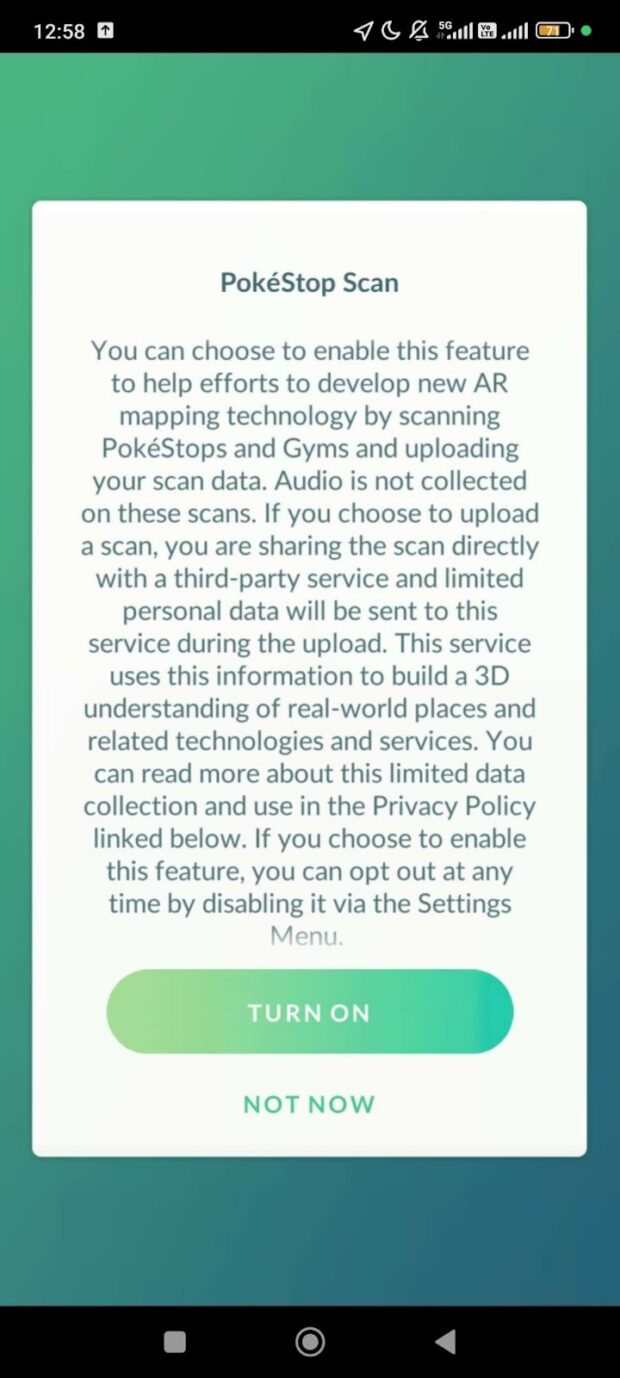
Whenever players access the AR Mapping system in Pokemon GO for the first time (or if they toggled it on again), a disclaimer window pops up, detailing how the scanned data may be shared with a third-party service alongside limited personal data.
However, Villanueva believes that scanning real-world areas carries some risks, citing an example at his job at the airport.
“Generally, there’s a ‘no photo/video’ rule inside certain parts of the airport. Anything outside of those areas and are of public access should be good. That said, I believe scanning areas will always innately contain risks and should be reviewed strictly by staff when it concerns sensitive areas like the airport,” Fish explained.
In the end, whether this development is seen as innovation or a privacy concern may ultimately depend on how companies like Niantic Spatial communicate these uses, together with how much control users are given over the data they help create.


