





The small miracle of NAIA e-gates


If you have flown internationally through NAIA recently, you have likely felt the tangible shift in the immigration workflow. I fly at least twelve times a year and I’ve noticed, with glee, how the Filipino lane – both arrivals and departures – has improved with the biometric e-gate rollout. The first few months were a tad grueling – it was a hit or miss for balikbayans who had to scan both their passports and boarding passes. I remember how many Filipinos would misplace their boarding passes and panic once they stepped into the scanner.
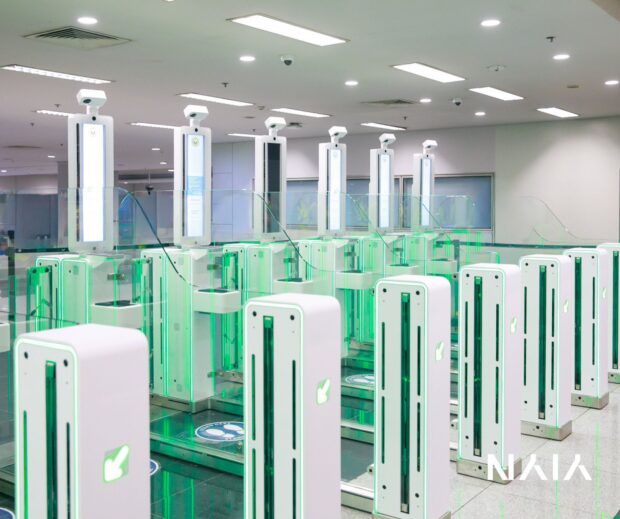
It’s widely different today with the improved online check-in kiosks and faster e-gate biometrics similar to Singapore’s Changi Airport. As I fly mostly with PAL for work reasons (I don’t get to choose the airline) I’ve consistently been out of the airplane and into NAIA Terminal 1 baggage claim in less than 5 minutes, with the e-gate ordeal reduced to seconds.
I’ve asked myself, why? How did this minor miracle happen? I did some digging and the answer is more elaborate than I thought.
This newfound “fast-travel” through the airport is the direct result of the eVerify and PhilSys integration. During the pandemic, everyone laughed at the idea of the National ID rollout. Remember when these ID’s were delayed (for months!) AND delivered on a sheet of paper for you to print out? Quality and efficiency aside, the irony of a literal piece of paper delivered to your doorstep paved the way to having these electronic gates in the airport.
Looking back at the National ID woes
Before the current DICT secretary Henry Aguda took seat, I was talking to his predecessor, former Secretary Ivan John Uy. I do not recall if it was at a DICT event or an event that we had organized in my past role, but what he said about the National ID vision struck me.
I asked why some banks do not accept the new national ID (the print out delivered to your home) despite it being a real ID. For identification, banks needed an ID with a signature – something the print out did not have. To be fair, the digital version on the eGovPH app had a signature. It turns out that the app, the Digital ID (which is the digital version of the National ID), the e-gates at the airport – these are all connected with one secure verifying system. The vision is that “one identification should rule them all” which means stepping into a building without leaving an ID, riding the MRT with audio deductible payments, or claiming a senior discount may only need a face ID scan similar to how the e-gates work.
This system brings about several questions: how secure is this data? Where is this data stored? Do we have data centers in the Philippines that can handle this task? Can we even afford data centers?
It’s a complex topic and thankfully I was able to shed some light here by talking to some representatives of Sumsub, a company that does ID verification for some Philippine companies and is working with the government to deploy a web of trust verification systems in a country where digital identity is nuanced.
Online fraud is not new. On one end, we see how a digital identity verifier can be helpful with the e-gates and with the eGov app that can display your TIN, Philhealth, and Digital ID. On the other end, you have mass cases of fraud with social engineering scams.
Nuances in Philippine context and culture
Historically, anti-fraud systems operate on binary rules. If multiple accounts log in from the exact same device and IP address, traditional security protocols immediately flag the behavior as a serial fraud attack and drop the ban-hammer.
But technology must adapt to human behavior. In rural areas across the Philippines, it is incredibly common for an entire household to share a single entry-level smartphone to access their respective digital wallets. Sumsub’s behavioral monitoring picks up on this localized nuance. By analyzing user patterns beyond the initial login, the platform differentiates between a legitimate family sharing a device out of economic necessity, and a malicious bot farm trying to brute-force a system.
Instead of locking out rural users, the system allows the client to adjust their risk tolerance. It prevents strict, Western-centric security models from aggressively disenfranchising users in developing markets.
Fighting the new fraud meta
On the other side of the spectrum is the escalating sophistication of actual bad actors. The current meta for cybercriminals involves using machine learning to generate synthetic data and deepfakes to bypass initial security checks. Once they penetrate the system, they operate in multi-step fraud chains, probing networks for weaknesses every few minutes.
Sumsub’s continuous transaction monitoring acts as an ongoing passive buff against these threats. Verification does not stop at the login screen. By utilizing device fingerprinting and analyzing the background textures of uploaded media, the system maps out network effects—instantly recognizing if multiple “different” users are actually operating from the exact same physical room. It looks at trends and other patterns to form a logical conclusion nuanced in a customer’s situation. At the end of the day, it is a highly efficient way to scale security without adding unnecessary friction to the legitimate user’s daily workflow.
Best-in-Slot utility for a digital economy
To push this infrastructure further, Sumsub recently partnered with Go Digital Pilipinas, bridging the gap between technological capabilities and public policy. The goal is to build a safe infrastructure that empowers MSMEs. As more micro-businesses transition to digital storefronts and engage in cross-border trade, they require enterprise-grade security to onboard their own customers without carrying the heavy financial burden of developing these tools in-house. A huge part of it is also consumer education at the grassroots level. It may sound so basic to many Filipinos but things like sharing passwords and falling for click scams are still rampant for account takeovers.
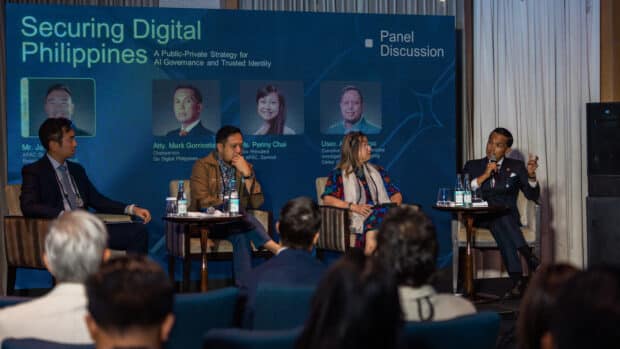
Currently, moving between different financial apps or government portals requires you to repeat the entire ID-scanning grind from scratch. Just as similar technologies power the seamless, one-scan verification at NAIA, Sumsub is deploying a framework where a user can verify their identity once and seamlessly carry that trusted status across different platforms within the ecosystem. It eliminates the redundant friction of multiple KYC (Know Your Customer) processes while remaining strictly compliant with local regulations.
Convenience and security: two sides of the same coin
Usually I write about the finished product, but this piece deserves a look into one of the moving parts that power security and convenience in an age where your physical ID is taken online. How do you make something convenient, yet secure? Frankly I’m tired of the Philippine bureaucracy needing several forms of identification for … another ID! Here’s hoping that this trend will cascade into better governance for all Filipinos.


