





OhMyV33NUS on representation, resilience & esports’ future


MANILA, Philippines – When we look back at the many firsts in Philippine esports, we often remember the championships, the sold-out arenas, and the players who helped put the country on the global stage. What is less often remembered are the quiet battles fought behind the scenes. The small victories that slowly made the industry more welcoming than it was before.
For many LGBTQ+ individuals, belonging is rarely given freely; it is something fought for, defended, and earned over time. In Philippine esports, that reality was familiar to Johnmar “OhMyV33NUS” Villaluna. Before the championships, international titles, and recognition, there was the challenge of proving that he deserved a place in the industry just as much as anyone else.
Known today as one of the most accomplished Mobile Legends: Bang Bang players in history, Villaluna helped lead Blacklist International through one of the most dominant eras in Philippine esports. With multiple MPL Philippines championships and international titles to his name, he became one of the defining figures of the game’s competitive scene. But behind the trophies and accolades is a story of resilience—one that mirrors the experiences of many LGBTQ+ individuals who have had to carve out space for themselves in industries where acceptance was never guaranteed.

The early game
Looking back on his early years in esports, Villaluna recalls a time when respect often felt conditional.
“I think the feeling of needing to prove something before they respect you. Before, the bashers were brutal, especially when I was starting out in the professional scene. Left and right, they’ll criticize me, not about my game, but about my identity,” he said during an interview with Tech INQ.
For many players, criticism comes with the territory. For Villaluna and many LGBTQ+ individuals, however, criticism often extended beyond gameplay. Losses could invite comments not just about performance, but about identity itself. It was a burden many players never had to carry.
Yet despite those challenges, he continued to compete, improve, and win. In doing so, he became part of a generation that helped make esports a more welcoming space than the one they entered.
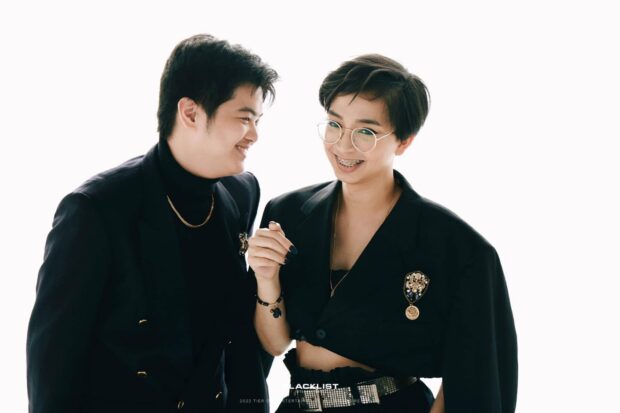
More than representation
Today, Villaluna sees progress in the industry, even if he acknowledges there is still work to be done.
Now, I see that the gaming community is more welcoming and inclusive, which is nice. We’re still far, but we’ve also reached further than what it was compared to before.”
That progress is also changing how younger players view representation. For Villaluna, success would be reaching a point where LGBTQ+ players are no longer seen as exceptions, but simply as part of the community.
“The goal is to make it a norm. If there is a young pro player that sees LGBTQ+ players, they won’t think that they’re special because they’ll really be part of the community.”
The conversation, however, goes beyond visibility. As esports continues to mature, Villaluna hopes inclusion extends into leadership, influence, and decision-making roles—spaces where the future of the industry is shaped.
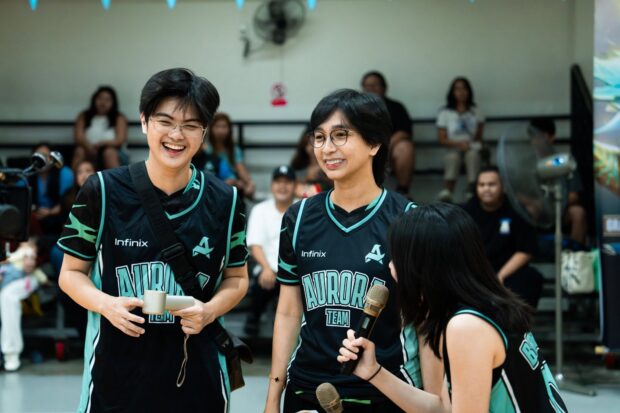
The real MVP
His own legacy, meanwhile, is measured by more than championships. While he remains proud of everything he has achieved in competition, some of the moments that stay with him the most come from people who found confidence through his journey.
“Of course, I’m proud of the championships that we have throughout my career. But whenever I see someone say that they feel confident because they witnessed my journey, even in the comment section of my live streams, that’s a different kind of fulfillment.”
For a player whose career has been defined by titles and victories, that impact carries a different kind of weight. Trophies celebrate what happened in a moment. Representation can change how someone sees themselves for years.
Looking ahead, Villaluna hopes the next generation of players will not have to spend their energy fighting for acceptance the way many before them did. Instead, he hopes they can focus on what every competitor should be focused on: the game itself.
“I hope there will come a time where their mindset will only be about how they could win, not if they’ll be accepted. Once we get to that point, then we can say that our industry has truly progressed.”
For someone who helped break barriers in Philippine esports, that vision may be the greatest achievement of all, not another championship, but a future where LGBTQ+ players are remembered not for overcoming prejudice, but simply for how well they played.


