





The rising cost of smartphones, RAM, and SSDs


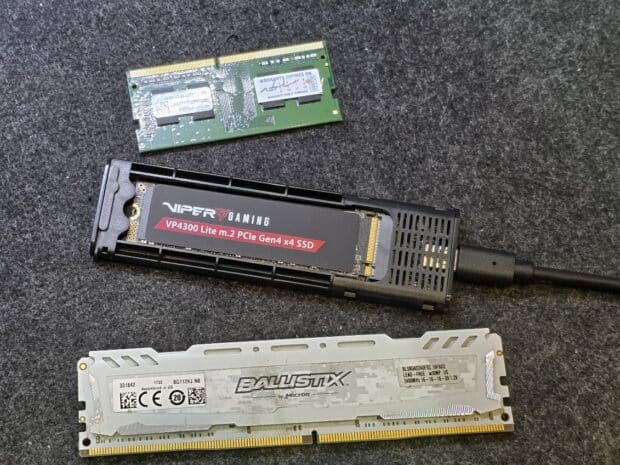
If you have been shopping around for a new smartphone released in 2026, or new peripherals for your computer – such as RAM sticks or SSDs (solid state drives), you may have been shocked to learn that these items seem to be priced at a premium, going as high as 40% to 60% in markup for smartphones, and over 100% for memory! NAND storage has not been spared as well. The latest nubia V80 Max is a prime example, which is now twice as expensive compared to last year’s model.
No, you are not being scammed. This is a rude awakening to the “AI tax.”
This is the industry response to the rapid shift in supply chain for HBM or high bandwidth memory, a type of RAM that is being used to power data centers for AI tasks. Since last year, the industry has issued an alert that by early 2026, global RAM manufacturers will be focusing their production on enterprise-grade RAM, and less on the RAM found in consumer tech. This is a business decision, as hyperscalers such as Google, Microsoft, and NVIDIA have increased their demand for HBM at an unprecedented level due to the AI boom. This has left manufacturers at a crossroads: fulfill consumer demand or grab the higher margins for the data centers? Most went for the latter.
To give more perspective, I saw this being advertised in Datablitz today: the Kingston FURY Beast used to sell for roughly P12,000 for an equivalent 2024 kit. Today, this 128GB set (64GB x 2) is being priced at P96,650.

As a consumer, what can you do?
The price increase in tech applies to products that are currently being released this year. It does not apply to unsold inventory or stock units from last year or the year prior. I have spoken to distributors, brand managers, and industry insiders on how to deal with this unprecedented situation. Here are some practical tips to consider if you need to buy your gadgets:
- If you are on a budget, look for devices from mid-2025 or even from 2024 that are still being sold. A Samsung Galaxy S24 Ultra or S25 Ultra for instance is still future-proof since Samsung provides up to seven years of software updates. Phones from HONOR (such as the Magic7 Pro) and Xiaomi / POCO (like the POCO F8 Ultra) also offer similar support for software updates.
- If you are in need of a new PC, don’t go the build-your-own route. Building your own PC means you will have to purchase the SSD and RAM sticks separately. Buy stock or prebuilt instead. In my case I was able to get a great deal on an ASUS ROG NUC 970 display unit from 2024. And guess what, it came with 32GB DDR5 RAM stock. If you bought that same RAM today, you would probably spend 25% of the cost on the RAM alone.
- The price of smartphone components is fluctuating every month due to supply chain constraints. Consumers need to free their mind from the notion of how phones are defined by category: budget, mid-range, upper mid, and flagship, and see instead how the price compares across other brands. Smartphone brands will begin to highlight other features such as toughness, screen size, camera – anything except storage and memory. So be aware of this. This price increase is said to be different from the pandemic-era inflated costs of GPUs for crypto mining. Experts say this will last for the next two to three years. Buy with this in mind.
- That being said, if you find devices that manage to break the entry level “TikTok market” of the sub-P5,000 category, you need to take a closer look and figure out why. Is it because these phones only come with 64GB of ROM to save costs? That would not make sense as you won’t even be able to install or play Mobile Legends and Call of Duty Mobile, as the OS alone takes up roughly 10-20GB of memory — what about your other apps and photos? Be informed!
Many industry pundits are saying that this is a manifestation of a bubble that is about to burst – similar to the first dot com bubble of the early 2000’s. Whether that is true or not, it’s better not to wait and see, especially if you need a new laptop or phone now. Happy tech hunting!


