





Cybersecurity in the Philippines is still lagging behind


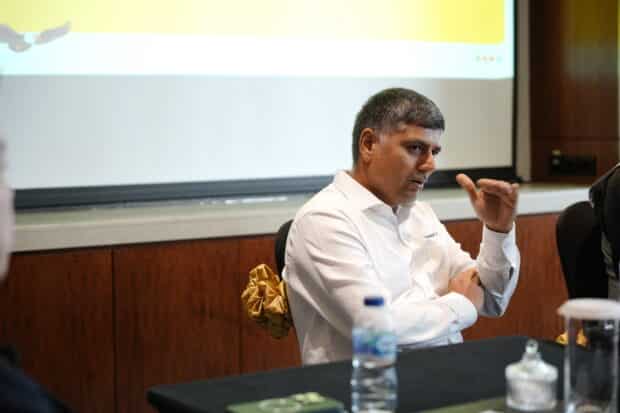
The rapid pace of digital transformation has changed how Philippine businesses operate. Banks have expanded digital services, enterprises have adopted cloud platforms, and hybrid work has become a permanent part of many organizations. Arun Kumar J, Regional Director for APAC at ManageEngine, believes those changes have also exposed a weakness that many organizations are still trying to address. Businesses have modernized their operations much faster than they have modernized their approach to cybersecurity.
“What has completely transformed after COVID is people taking the cloud approach and enabling remote workforce,” Kumar told INQUIRER.net. “They have expanded the attack surface.”
Before the pandemic, protecting corporate systems was comparatively straightforward. Most employees worked within office networks, company data largely stayed inside the organization, and IT teams managed a predictable set of devices. That changed as businesses moved workloads into the cloud, adopted SaaS platforms, and gave employees the flexibility to work from almost anywhere. Each new platform, employee account, mobile device, and remote connection became another point that organizations had to secure.
Kumar believes many companies have responded by adding more technology without changing how they think about cybersecurity.
Organizations commonly manage infrastructure, endpoint protection, identity management, cloud services, and application monitoring through separate platforms. Each system performs its own function well, but they often operate independently from one another. That separation becomes a problem when attackers move across multiple systems instead of targeting just one.
“An incident doesn’t happen just like that. It’s a sequence of different events,” Kumar said.
He explained that attackers rarely compromise an organization through a single action. They might gain access through a compromised account, move laterally to another device, obtain higher privileges, and eventually reach sensitive systems or customer data. Looking at only one stage of that process makes it difficult to understand what is happening across the rest of the environment.
“On one end, you have cloud infrastructure. On the other end, you have on-premise infrastructure. Then you have different applications. Then you have employees carrying laptops, desktops, and mobile devices,” he said. “There are different points where an attacker can actually come inside.”
Because those activities happen across different parts of an organization’s infrastructure, Kumar believes companies need visibility that extends beyond individual security products.
“The tools are very, very disjointed,” he said. “Unless you are able to build a holistic view across different applications, users, identities, devices, databases, and hardware, you will not be able to proactively manage your cybersecurity posture.”
That philosophy also influences how ManageEngine views digital transformation itself. Kumar said many organizations continue treating cybersecurity as something that follows digital transformation, when both should evolve together because modern businesses increasingly depend on technology to deliver their products and services.
He pointed to how the role of enterprise IT has changed over the past decade. IT departments were once viewed primarily as internal support teams that maintained devices and resolved technical issues. Today, business operations depend on IT to keep applications available, maintain employee productivity, protect customer data, and deliver reliable digital services.
“Ten years before, IT teams were just enablers,” Kumar said. “Today, IT has moved away from being an enabler to supporting businesses.”
That shift has also influenced how ManageEngine views the Philippine market. Kumar rejected the idea that the country’s continued investment in on-premise infrastructure reflects slow technology adoption. He said industries such as banking, finance, and IT-BPM continue expanding their digital capabilities, while regulations surrounding data protection and data sovereignty make on-premise deployments necessary for many organizations.
“I wouldn’t actually call it lagging behind,” he said. “The success in terms of on-premise is predominantly because of regulations, data protection, and data sovereignty requirements.”
The issue, in his view, is not whether organizations are adopting new technology. It is whether they are becoming more resilient as they do so.
“The Philippines is still lagging in terms of being very cyber resilient.”
That challenge becomes even more complicated as artificial intelligence becomes part of everyday business operations. Kumar expects enterprises to continue using AI to automate workflows and improve productivity, but he also expects attackers to adopt the same technologies to automate phishing campaigns, reconnaissance, and other parts of the attack process.
“AI is always a double-edged sword,” he said. “You also have hackers using AI.”
Kumar does not believe the shortage of cybersecurity professionals is unique to the Philippines. Organizations around the world are competing for the same talent while facing increasingly sophisticated attacks. He believes companies will need to invest in retraining existing employees, while universities and technology companies work together to prepare graduates with cybersecurity and AI skills that reflect the needs of modern enterprises.
He also argued that stronger cybersecurity depends as much on employees as it does on technology. Organizations can invest heavily in security platforms, but employees still need to recognize suspicious activity, report incidents quickly, manage passwords responsibly, and understand emerging threats such as AI-generated phishing and deepfakes.
“Humans are still the weakest link in cybersecurity,” Kumar said. “Cybersecurity cannot be looked at as just an IT responsibility. It’s everyone’s responsibility.”
For Kumar, organizations that continue treating infrastructure, applications, security, and employee awareness as separate initiatives will struggle to keep pace with increasingly complex attacks. Digital transformation has connected every part of the modern enterprise. He believes cybersecurity strategies need to reflect that same reality if businesses want to strengthen their resilience over the years ahead.


