





GOing around Intramuros for PokeStops


MANILA, Philippines — Besides Buwan ng Wika, the Philippines also celebrates National History Month every August. As such, what better way to celebrate National History Month than to be physically present at places where history was made, like Intramuros. Places that contain whispers from its past. Places that your forefathers may have been.
To spin this off — and to hit two birds with one stone — we’ve made a PokeStop travel guide for our dear Pokemon GO players. This way, you can still continue your never-ending Pokemon Master journey whilst learning history from the places that you’ll be visiting.
For the first of two articles in this series, we’ll be venturing into the historic walled city of Intramuros.
Now, it’s time to activate your Spatial Rend or Roar of Time, make sure you’ve stocked up on Pokeballs, and pop those Lucky Eggs, Star Pieces, and Incense as we go around Intramuros for PokeStops.
Anda Circle PokeStop
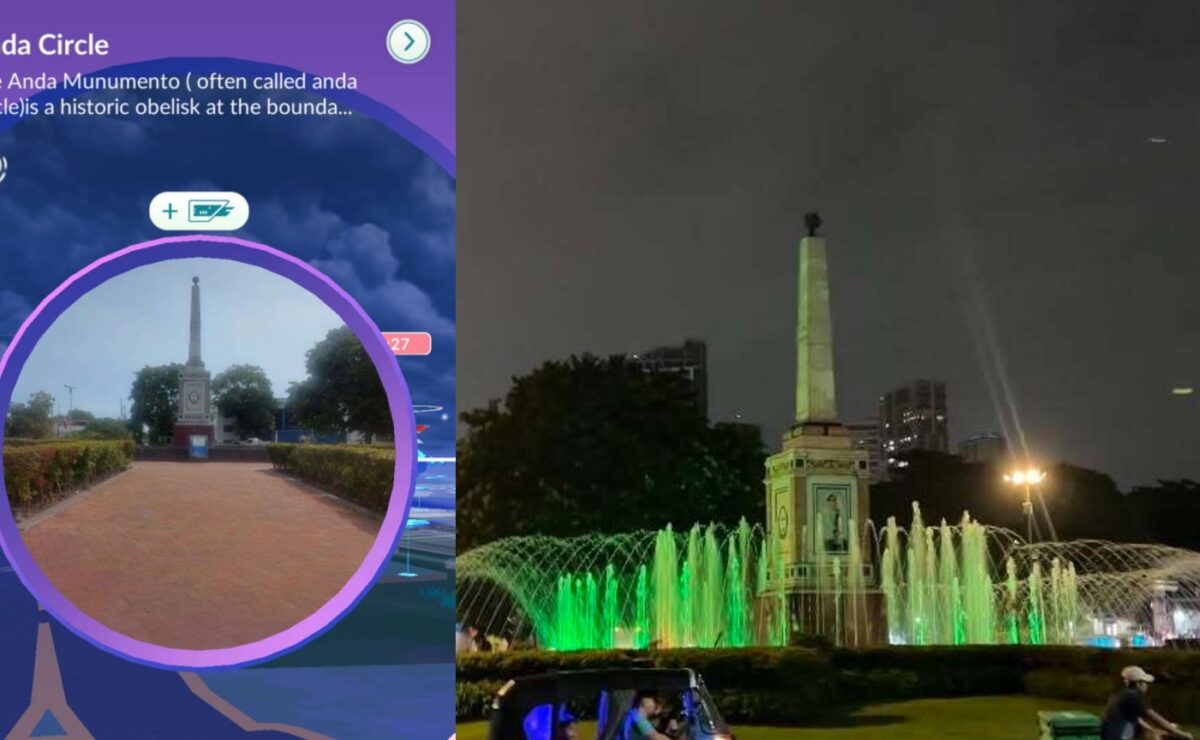
The Anda Monument is dedicated to Simon de Anda y Salazar, the 41st governor general of the Philippines who served from 1770 to 1776. He is remembered for fighting off the British during their occupation in Manila from 1762 to 1764.
As for the monument itself, it was then Governor-General Maria de la Torre who proposed it and eventually it was erected in 1871 near the mouth of the Pasig River. Due to the damage sustained during the Second World War, it was relocated to where it is now.
In 2014, the Anda Circle faced another possible relocation when the Department of Public Works and Highways planned to remove the roundabout. However, the plan was eventually halted after the National Historical Commission of the Philippines determined that moving the monument would be unsafe.
RELATED STORY: Ten years of playing Pokemon GO
Memorare Foundation Marker PokeStop
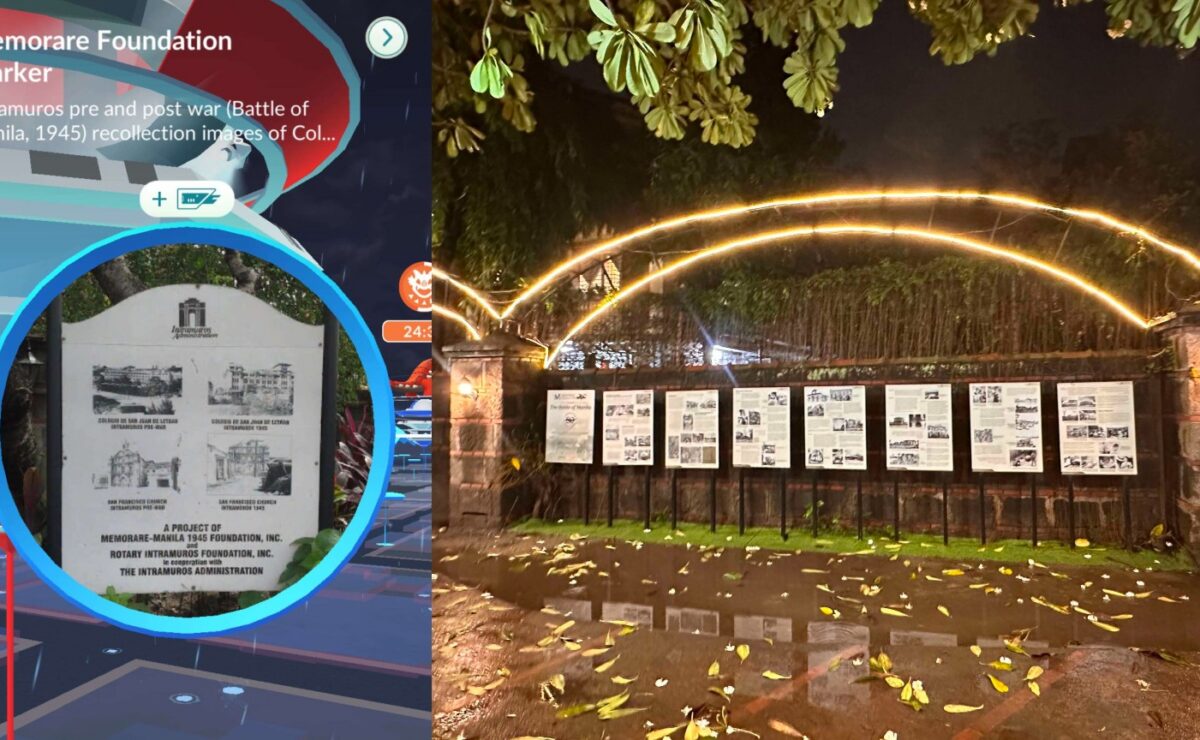
Nestled inside the historic walls of Intramuros, the Memorare Foundation Marker PokeStop reminds us of some of the horrors the place has witnessed throughout history.
Sculpted by Peter de Guzman, the Memorare-Manila 1945 Monument commemorates the lives that perished during the bloody battle for Manila’s liberation from the Japanese Imperial Army in 1945.
The sculpture of the monument depicts a hooded woman carrying what seems to be a lifeless child cradled in her arms. Surrounding her are six other figures, seemingly suffering as well, a peek into the despair brought upon Filipinos during the liberation battle.
Meanwhile, the late Philippine National Artist for Literature Nick Joaquin wrote the inscription on the base of the monument.
A portion of it reads: “This memorial is dedicated to all those innocent victims of war, many of whom went nameless and unknown to a common grave, or never even knew a grave at all, their bodies having been consumed by fire or crushed to dust beneath the rubble of ruins.
Let this monument be a gravestone for each and every one of the over 100,000 men, women, children and infants killed in Manila during its battle of liberation, Feb. 3 to March 3, 1945. We have never forgotten them. Nor shall we ever forget.”
Bell Tower of Manila Cathedral PokeStop
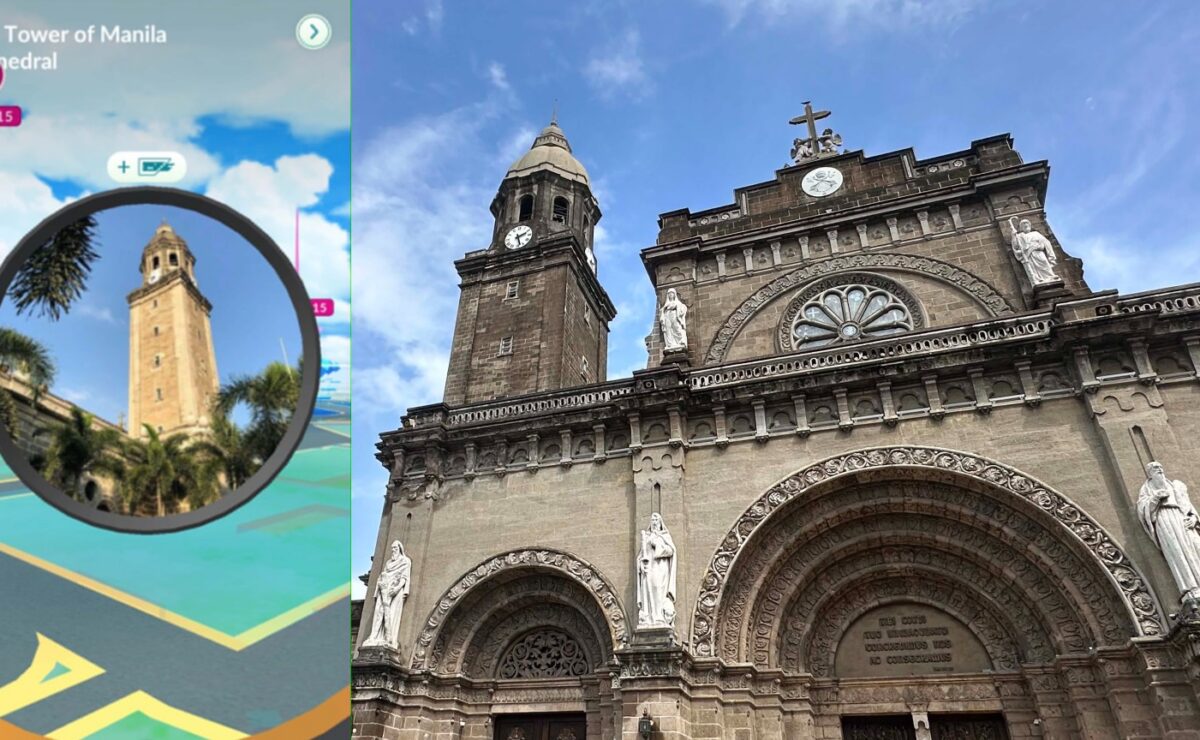
Humbly starting as a church made of nipa and bamboo, the Minor Basilica of the Immaculate Conception Manila Metropolitan Cathedral (or simply known as Manila Cathedral) stands as a reminder that faith persists even through cycles of destructive disasters.
Currently in its eight iteration, the Manila Cathedral was built, destroyed, and rebuilt again multiple times due to disasters that struck the church, such as a fire, earthquakes, and even the Battle of Manila in 1945 during the Second World War.
As for the bell tower structure itself — which is the actual PokeStop featured for this article — the original one featured an octagonal design. Unfortunately, just like the cathedral’s main structure, it was repeatedly damaged and destroyed.
Today’s bell tower design is courtesy of Filipino architect and civil engineer Fernando Ocampo, who also designed the rest of the current cathedral’s design.
Casa Manila Patio PokeStop

In Spanish, Casa Manila means ‘Manila house’, which is fitting considering the museum’s 19th century lifestyle theme.
Casa Manila is one of the houses located in Plaza San Luis, which showcases the different eras of Filipino-Spanish Architecture.
This particular house, specifically its facade, was inspired by a house that once stood in Binondo during the 1850s.
Continuing the 19th century theme, much of the curated interior decorations of the house, from the furniture to other artifacts, are typical of what you’d see in affluent Filipino homes during this Spanish colonial period.
Church of San Agustin PokeStop
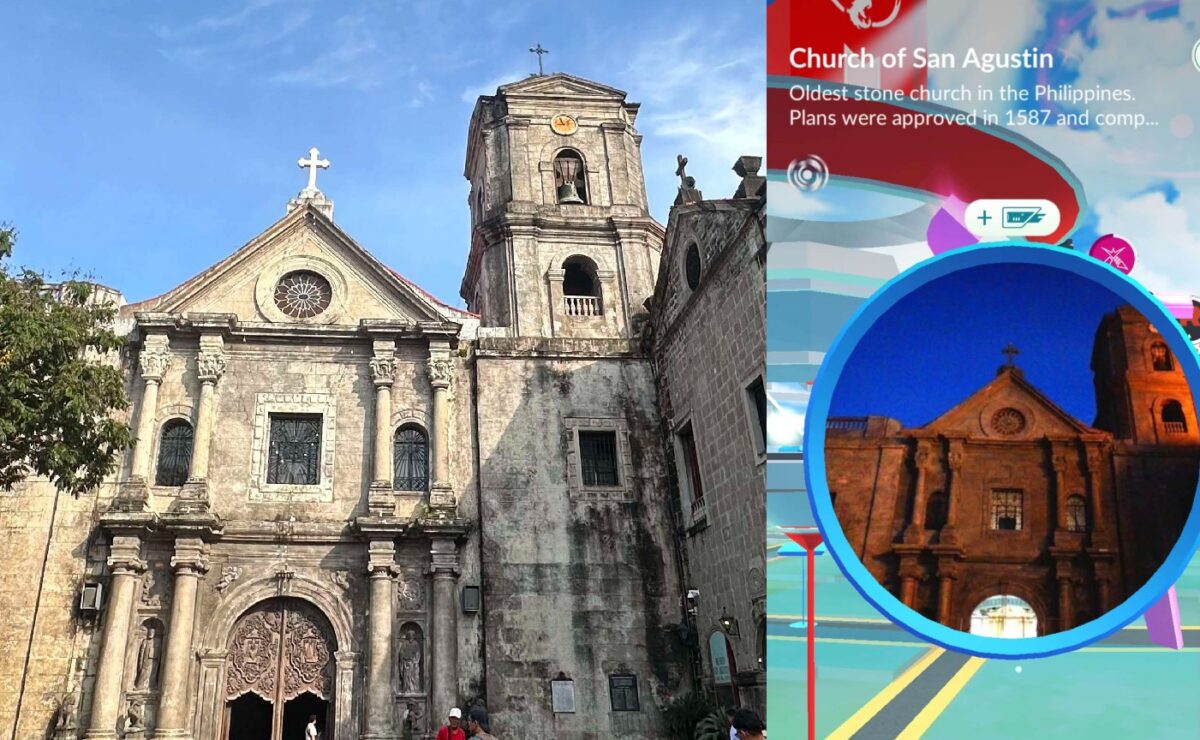
Just across the block from Casa Manila, the next Pokestop would be the Church of San Agustin.
San Agustin is one of the four Baroque churches constructed during the Spanish colonial period in the Philippines to be designated as a World Heritage Site by UNESCO, the other three being the Santa Maria Church in Ilocos Sur, Paoay Church in Ilocos Norte, and Miagao Church in Iloilo.
Just like most pre-colonial early colonial structures in the Philippines, the original 1571 church was made out of local organic materials (specifically nipa and bamboo) and was initially known as Iglesia y Convento de San Pablo (Church and Convent of Saint Paul).
Unfortunately, it was destroyed when the Chinese pirate Limahong invaded and razed Manila in 1574. Then, it was reconstructed a year later, but also fell to another fire thus the third iteration being constructed out of locally quarried adobe stone and lime mortar.
From then on, San Agustin survived the British Invasion in 1762, the Spanish-American War in 1898, and the Japanese Invasion in 1942.
Baluarte De San Diego PokeStop
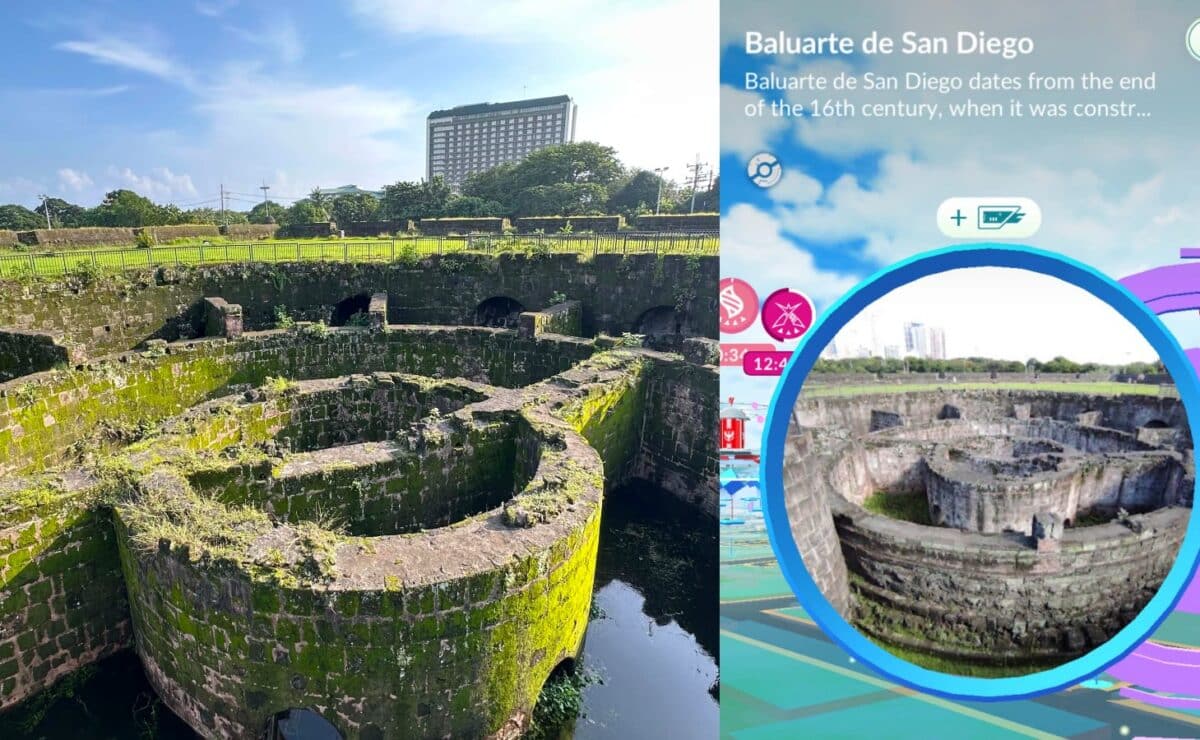
Before it became part of the walled city’s wall, the original structure of was a circular fort, which was called the Fort Nuestra Señora de Guia back then.
Eventually, the fort was absorbed and integrated into Intramuros in 1593 after its renovation, as the original circular tower suffered cracks in its structure.
Serving as part of the defensive design of Intramuros, Baluarte de San Diego was actually breached by British forces as they occupied Manila from 1762 to 1764.
After that, it was restored but was damaged again during an earthquake in 1863. Funnily enough, the earthquake inadvertently saved the stone structure as it was then buried under layers of soil during the American occupation, thereby saving it from destruction despite the Battle of Manila in 1945.
After the Second World War, Baluarte de San Diego was excavated in 1979 and was restored by 1992. The site now contains a garden, a fountain (which is also now a PokeStop), and now serves as an archaeological park.
Puerta Real and Revellin De Real Bagumbayan PokeStop

Technically, this PokeStop is actually two places.
Puerta Real refers to the gate itself, while Revellin de Real Bagumbayan refers to the ravelin behind it — a triangular or V-shaped defensive structure built outside the main fortress to help protect it from attacking enemies.
As it means ‘royal gate’ in Spanish, Puerta Real was used by the Spanish Governor-General solely for state occasions. Its original location was in General Luna Street (formerly Calle Real del Palacio), facing Bagumbayan (which was once a village before eventually becoming the Rizal Park).
Just like Baluarte de San Diego, Puerta Real was destroyed during the British Invasion of Manila in 1762. After that, Puerta Real was first walled in before eventually being relocated behind Revellin Real de Bagumbayan, thereby connecting the two before becoming a PokeStop today.
GOing Around Intramuros for PokeStops
Going around Intramuros spinning for PokeStops makes for a very fun yet lengthy experience, which is why we capped this list to just the featured PokeStops.
That said, Intramuros and its many PokeStops are full of stories. As such, try putting that phone down for a bit to look, listen, and take in the history that one is surrounded in. Once you’re done taking history in, you can log back in to Pokemon GO to proceed to the next PokeStop — rinse and repeat.
Now that you’re done with Intramuros, we’ll be flying down south to our next destination. See you at the Queen City of the South, fellow Pokemon GO players!
RELATED STORY: Choosing between Mega Mewtwo X and Y in Pokemon GO


