


The new Cayenne Electric is a looker


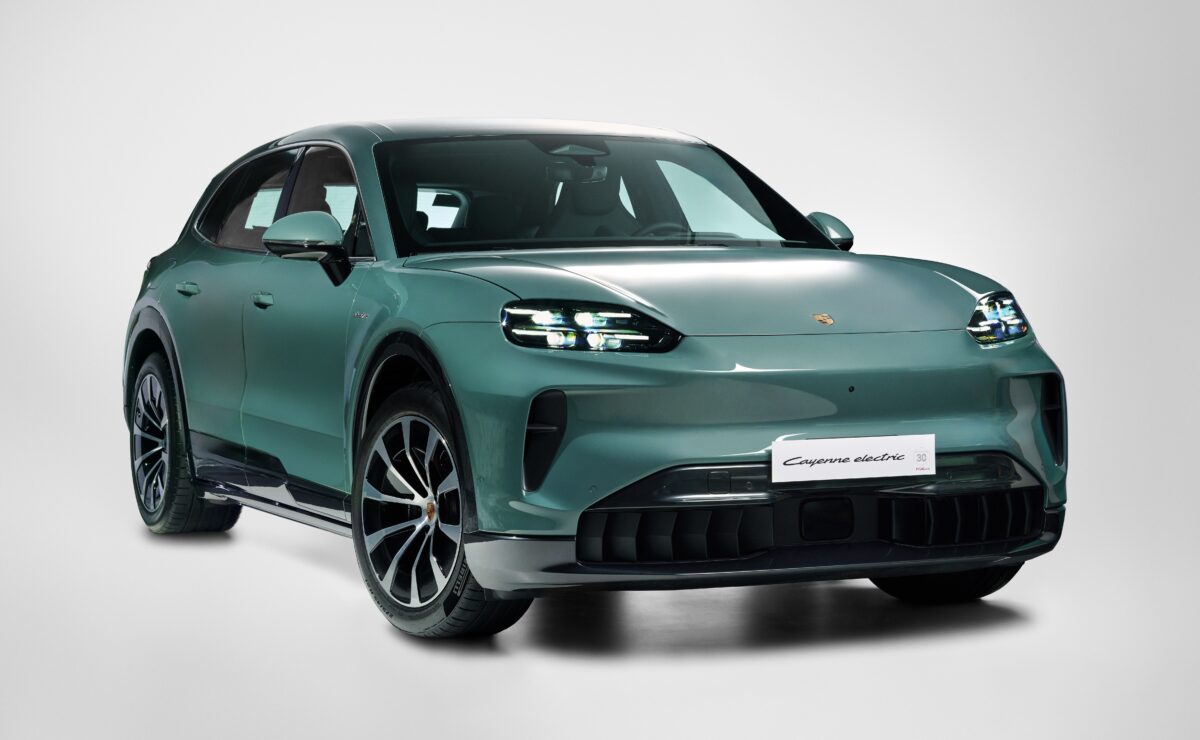
Porsche has officially introduced the all-electric Cayenne to the Philippine market. This transitions its flagship SUV line to a high-voltage battery architecture.
The launch coincides with the brand’s 30th anniversary in the country. It marks a critical hardware milestone for Porsche’s transition to software-defined, zero-emission platforms across Southeast Asia.
Specced Out
The Philippine-spec Cayenne Electric packages a dual-motor, all-wheel-drive powertrain paired with a 113 kWh gross-capacity battery integrated into the floorpan. The system generates up to 325 kW (442 hp) and 835 Nm of torque with Launch Control active. This pushes the SUV from zero to 100 km/h in 4.8 seconds. On the efficiency front, the pack yields up to 642 kilometers of driving range on the WLTP cycle.
The powertrain’s standout engineering lies in its high-voltage architecture, which accepts peak DC fast-charging rates of up to 400 kW. At high-output DC charging hubs, this significantly shortens typical fast-charge intervals, while daily home charging is governed by an integrated 11 kW onboard AC converter.
Porsche has reworked the vehicle’s interior footprint around an elongated 3,023 mm wheelbase, offsetting underfloor battery bulk to increase rear passenger legroom to 511 mm. The second-row seating system is fully motorized, featuring 150 mm of fore-aft travel alongside an 18-degree backrest tilt to allow dynamic trade-offs between rear legroom and cargo capacity.
Flow Display
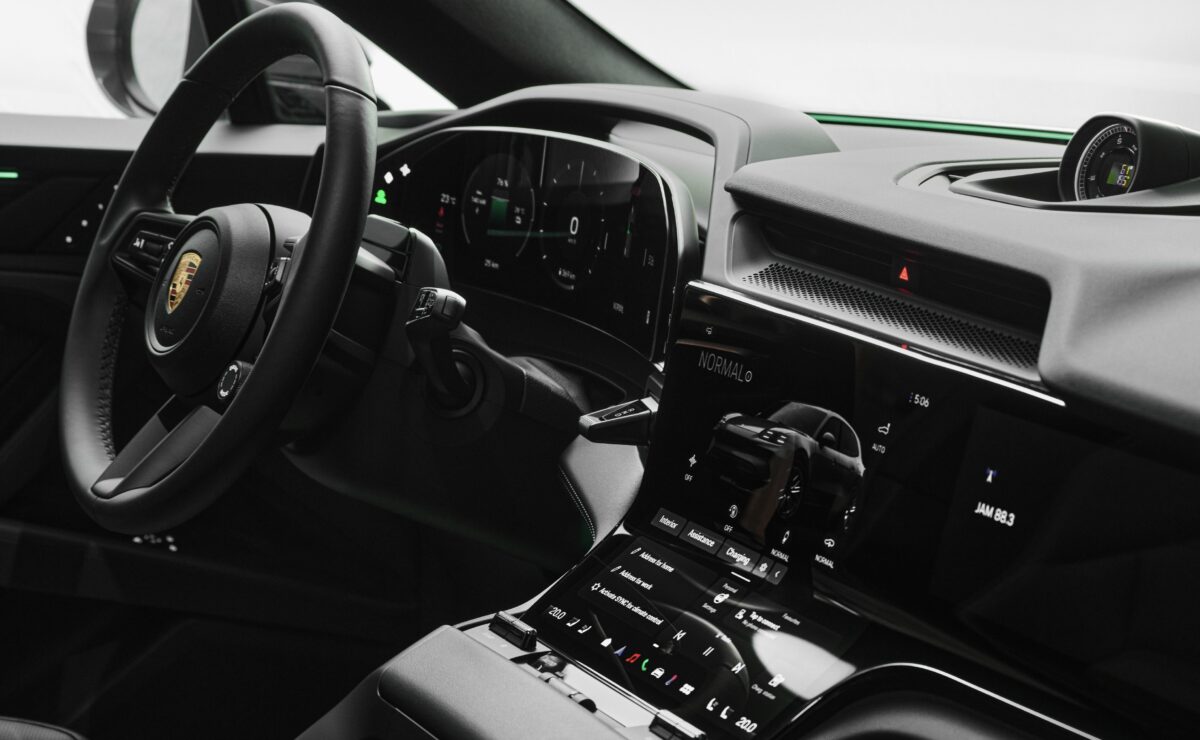
Inside, the cabin shifts entirely toward an expansive digital cockpit centered around Porsche’s new “Flow Display.” It is a sweeping, curved OLED console that represents the largest screen surface fitted to date in a Porsche.
Front passengers can also access an optional 14.9-inch auxiliary display dedicated to media streaming and navigation telemetry.
On-road dynamics are governed by standard adaptive air suspension paired with Porsche Active Suspension Management (PASM), with optional hardware upgrades. These include rear-axle steering and the brand’s active-hydraulic chassis leveling system. The suite includes other features like Adaptive Cruise Control, Lane Change Assist, and ParkAssist with a 2D surround-view array.
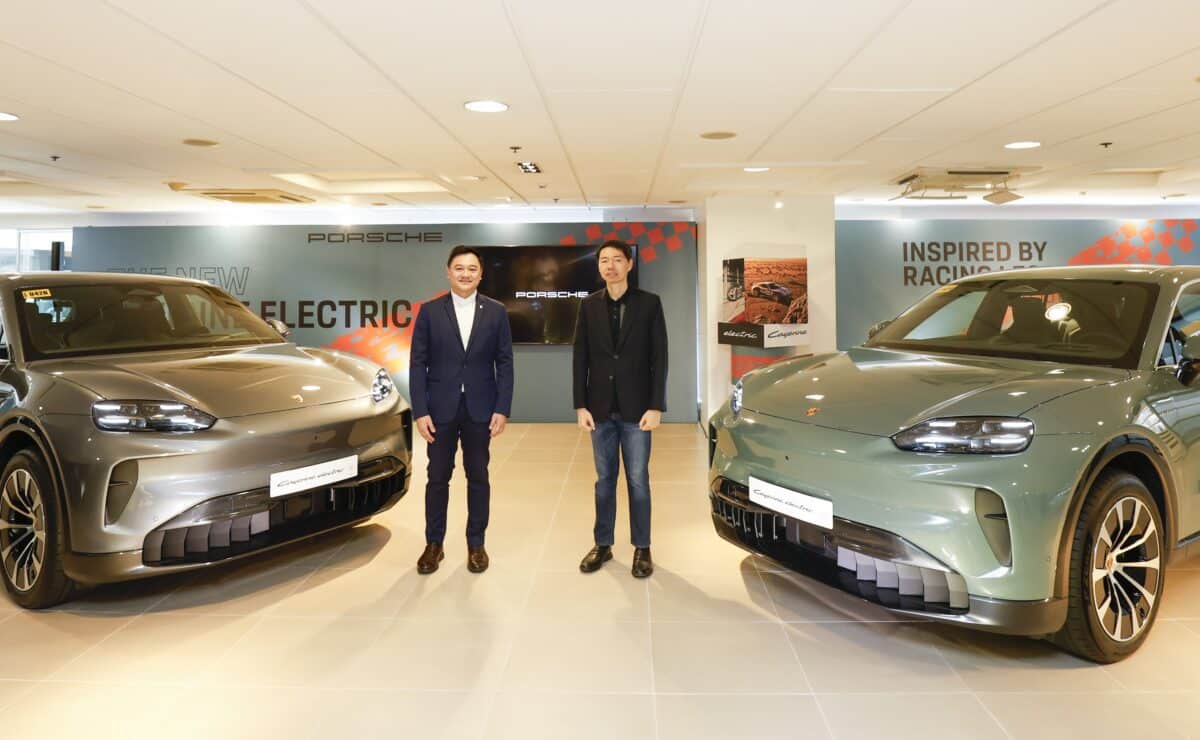
By keeping the Cayenne Electric on showroom floors alongside existing petrol and hybrid configurations, Porsche is pursuing a pragmatic hedge against regional charging infrastructure limitations.


