





Opinion: Microsoft Gaming’s change in leadership portends an uncertain future for Xbox


Phil Spencer, the CEO of Microsoft Gaming, will be retiring. His departure puts an end to 13 years of leadership of all things gaming at the software giant. That’s part of 25 years with the Xbox division and a 38 year career that began in 1988 as an intern. His retirement will be effective on Monday next week.
The news came at the end of a week dominated by doom and gloom headlines about Sony. Microsoft dropping industry changing news like this on a Friday has left publishers, developers, reporters and consumers struggling to process and respond. Like any good multinational conglomerate, they came prepared with statements from Microsoft boss Satya Nadella, Xbox chief content officer Matt Booty and Spencer’s replacement, Asha Sharma.

The new CEO of Microsoft Gaming joined the company in 2024. Prior to that she was VP of Product and Engineering at Meta. She was also COO at Instacart, the grocery delivery service app. As head of AI, pundits and players have expressed concern about Sharma’s bonafides for gaming and entertainment products and services. Nadella said of her, “she brings deep experience building and growing platforms, aligning business models to long-term value, and operating at global scale, which will be critical in leading our gaming business into its next era of growth.” Nadella added that between her and Booty, they have “the right combination of consumer product leadership and gaming depth to push our platform innovation and content pipeline forward.”
In her statement, Sharma spoke of monetization and AI but assured that “we will not chase short-term efficiency or flood our ecosystem with soulless AI slop,” and added that “games are and always will be art, crafted by humans, and created with the most innovative technology provided by us.” It will remain to be seen in the years to come how sincere and committed Sharma is to as she puts it, “great games beloved by players,” and studios and franchises “grounded in what players care about most.”
In his e-mail to staff, Spencer said that the conversation about stepping back from Microsoft and Xbox began with Nadella last fall. As announcements go, he delivered the news in the manner befitting a company man. He said Sharma’s new role was an “exciting new chapter for Microsoft Gaming,” and that he would remain in an advisory role through the rest of the year to “support a smooth handoff.”
There has been plenty of lot of grousing and grumbling about Xbox these past few years. Recent headlines about the division have revolved around layoffs and confusing messaging and strategy. But when Spencer was first named head of Xbox back in 2014, he inherited a brand that had irked many of its most devoted players. Policy choices and poor messaging made by previous leadership about the Xbox One is generally agreed to have undone good will earned during previous console generations.
But under Spencer the Xbox brand gradually re-aligned into the good graces of the gaming public. He led the charge for backwards compatibility across three generations of hardware. He helped usher in Xbox Game Pass, for years considered the best value in gaming. Under him, major strides in accessibility for hardware and software were made. And Xbox Play Anywhere laid the foundation for the cross-device strategy that exists today. Spencer also regularly found time on Xbox Live to play games and join random multiplayer sessions, which helped identify him among Xbox gamers as “one of us.”
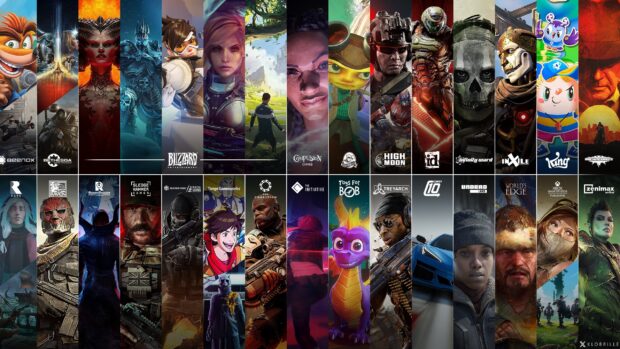
The biggest headline generated during Spencer’s time running Xbox was the acquisition of Activision-Blizzard-King in 2022. A deal that cost Microsoft a nice $69 billion and took two years to secure approval from regulatory agencies around the world. Prior to this massive get, Xbox acquired Zenimax, the parent company of Bethesda Softworks that publishes the Doom, Elder Scrolls, Fallout, Quake and many other IPs. And that’s to say nothing of the dozens of other studio acquisitions including Ninja Theory, Playground Games, Obsidian Entertainment and Double Fine.
Things have been a bit grimmer since then. While the Xbox Series consoles are arguably top tier devices with a wealth of features that has kept this writer/gamer satisfied, a lack of truly compelling software has hurt hardware sales. Plenty of good games, but no generational, wide-reaching greats. Despite strong momentum in 2020, sales for Series devices slowed to the point that Microsoft has stopped reporting numbers. For most devotees of the Xbox brand, the future has felt uncertain. Now they have more reason to worry.
In spite of all the assurances, details suggest that this was a massive shakeup for Microsoft and Xbox. In July of last year, Microsoft communications chief Frank Shaw said that Spencer would not be retiring “anytime soon.” That comment was made mere months before Spencer allegedly started discussing his retirement. However way you look at it, Spencer’s change of plans was to a degree, sudden. Further complicating this is the future of Sarah Bond, who until this week, served as president of Xbox.
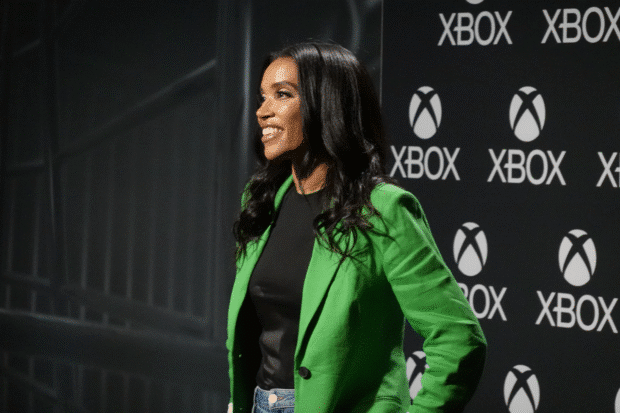
At the time of the announcement, no message was forthcoming from Sarah Bond. Between all the statements only Spencer noted Bond’s resignation, while Nadella mentioned everyone but Bond in his e-mail to staff. No word regarding her departure nor a statement was made from any of her public facing accounts and social media until after working hours when she made a lengthy, but professionally diplomatic post to LinkedIn. She wrote that it was she “decided this is the right time for me to take my next step, both personally and professionally,” but with little explanation as to the why.
Bond reflected on her time with Xbox with apparent pride, noting the years in which she led the division through “a critical period off change,” and “positioned the business for what comes next.” Like Spencer, she will remain as an advisor to the company to help in the leadership transition and thanked him for his mentorship and friendship. It’s all by the numbers corporate farewell stuff, but with few answers or clarity as to what has happened at Microsoft Gaming.
These developments are curious as Bond was perceived as in line to take his place upon his inevitable retirement. Sharma’s promotion over Bond’s is a surprise to literally anyone following the company. Prior to becoming President of Xbox – the position that Spencer previously occupied – Bond was head of developer experiences and head of ecosystem, where she helped develop the platform for game makers and was credited with expanding relationships with studios. One of the indignities Bond had to deal with as President was having to publicly defend studios closures like those of Tango Gameworks and Arkane Austin.
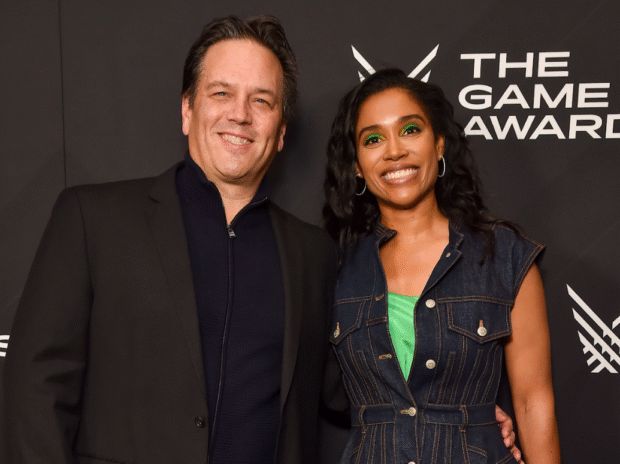
Bond’s rise through Xbox paralleled a time when Microsoft began investments into Black representation in senior leadership. But even setting that aside, there is literally no reason that makes sense – outside of an internal change in values and vision – that she is not taking Spencer’s place. That being said, this might be for the best for Spencer and Bond. Reports are that Microsoft has placed an incredible amount of pressure on Gaming and Xbox to deliver unrealistic returns to offset multi-billion dollar losses on AI and Windows products and services.
Perhaps it was becoming clear that whatever future Spencer may have wanted to build, and whatever vision Bond had ready for Microsoft Gaming had become incompatible with Nadella’s leadership goals. “Power your dreams,” Xbox marketing used to say. Maybe the power is somewhere else, near a data center and draining a nearby freshwater lake.


