





As fear moves online, Filipinos fight to reclaim digital spaces


MANILA, Philippines – Five years ago, Filipinos were glued to their screens for COVID-19 updates, daily case counts, lockdown rules, and the anxious posts of strangers who suddenly felt connected by the same crisis.
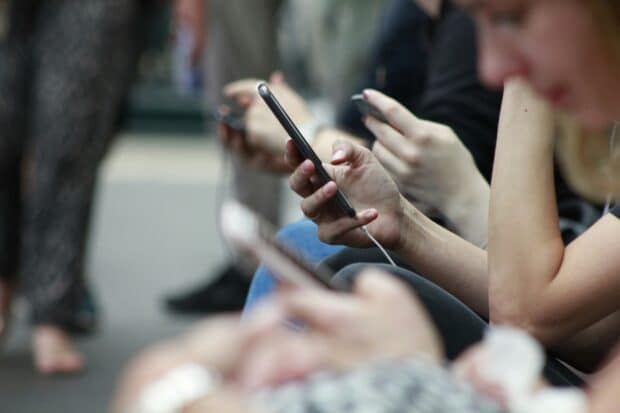
Today, the screens are still glowing, but the fears have changed. War scare headlines replace health bulletins. Oil shortage concerns a trend beside rising geopolitical tensions. The uncertainty remains, only the language of fear has shifted.
And like many people, I often find myself returning to the same habit whenever boredom creeps in when I reach for my phone. I scroll endlessly through social media, watching one TikTok video after another, barely noticing how much time has passed.
What starts as a way to pass a few idle minutes often turns into an hour of consuming headlines, opinions, memes, and clips designed to keep me watching. Somewhere between entertainment and information, the screen becomes both distraction and daily routine.
The world changed fast, and the online world changed even faster.
The internet as the new public square
Digital spaces have become the country’s largest public square where Filipinos gather for news, arguments, entertainment, and community.
It is where narratives collide and where people try to understand problems that feel too large to grasp, but it is also where manipulation thrives.
Disinformation spreads militaristic stories. Deepfakes blur the line between truth and fabrication. Surveillance grows quietly in the background. What was once casual scrolling now often feels like navigating a space designed to influence what people think and what they fear.
For many Filipinos, speaking online can feel risky, sometimes even dangerous.
Still, this story is also about resistance. Despite the noise, many Filipinos are learning how to protect themselves and each other through digital literacy, privacy tools, encryption, community fact-checking, and a growing awareness of AI-generated manipulation. Activists and ordinary users alike continue to push back against intimidation in digital spaces.
CPU and the fight for digital rights
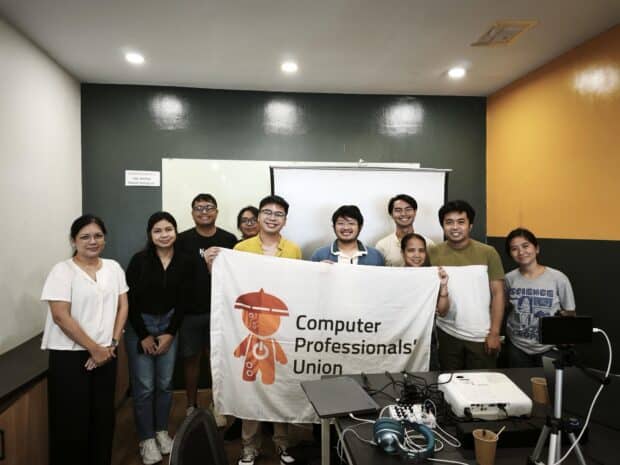
One group at the forefront of that fight is the Computer Professionals’ Union (CPU), a sectoral organization of information technology workers, students, educators, and digital advocates in the Philippines. CPU pushes for a people-centered use of technology, arguing that digital tools should serve the public rather than corporations, political interests, or systems of repression.
The organization has been vocal on issues such as data privacy, surveillance laws, labor rights in the tech industry, platform accountability, and the growing spread of online disinformation. Through forums, campaigns, educational discussions, and grassroots organizing, CPU seeks to show how technology intersects with democracy, human rights, and everyday life.
For CPU Chairperson Ian Aragaza, disinformation has become one of the most powerful tools shaping public perception among Filipinos today. He said false narratives continue to influence opinions on both international conflicts and domestic political issues, from geopolitical tensions to political dynasties and rising fuel prices.
“Large swathes of disinformation have also led to many people doubting mainstream accredited news outlets and journalists, leading people to depend more and more on disinformation and further suppressing critical thinking and analysis from Filipinos,” Aragaza said.
He added that digital repression often takes the form of red-tagging, where activists, journalists, and organizations are baselessly linked to armed groups. While some dismiss these attacks as mere online comments, Aragaza said the consequences can be far more serious.
“In digital spaces, we often see this harassment and repression in the form of red-tagging… these baseless associations with terrorists or armed groups paired with the military’s ruthless assault on peasant communities even slightly suspected of association with the rebels means that online harassment is a very real threat to the lives of these activists and journalists,” he said.
The rise of artificial intelligence has added another layer to the crisis. Aragaza stated that deepfakes and AI-generated content now make it easier for troll farms and disinformation networks to automate false narratives at scale.
“This means that if social media platforms don’t take active policies to fight back against this automated wave of disinformation, our digital platforms will get flooded with so much disinformation that Filipinos will find it increasingly harder to find factual reports and critical analysis anywhere on social media,” he said.
Privacy, surveillance, and resistance
At the center of privacy debates is the Philippines’ SIM Registration Act, signed into law in 2022, which requires mobile users to register SIM cards using personal information and valid identification.
The law was introduced to combat scams, spam texts, and cybercrime. Yet despite mass registration, scam messages, phishing attempts, and fraud complaints have continued, raising questions about its effectiveness.
Critics also warned that the centralized collection of personal data created new risks if databases were breached or misused.
Recent digital security incidents have intensified public concern. In the past year, Filipinos have continued to report text scams using personal names, suspicious loan offers, fake delivery notices, and phishing links.
Several government websites and agencies have also faced cyberattacks, while past large-scale data breaches involving public institutions remain fresh in public memory.
Social media users have likewise encountered hacked accounts, identity theft schemes, and fake pages using AI-generated images or cloned voices to deceive victims.
The digital security climate in the Philippines has therefore become more complex: citizens face both ordinary cybercrime and more sophisticated forms of manipulation.
At the same time, proposals such as mandatory social media registration and stricter monitoring measures have sparked fears of expanded surveillance and threats to free expression. For many advocates, the challenge is no longer just staying safe online—it is staying free online.
Aragaza criticized these measures, saying they ask citizens to exchange privacy for security without addressing the root causes of cybercrime.
“They are asking people to give up their privacy for security in these digital spaces, but in truth their actions actually make the digital landscape even more hostile,” he said.
Despite the growing threats, Aragaza said Filipinos are refusing to surrender digital spaces without a fight.
Grassroots groups, activists, and ordinary users continue pushing back against policies such as the SIM Registration Law and proposed social media registration measures, while turning to encrypted messaging platforms, stronger security practices, and community-led digital literacy efforts. Others are leaving data-hungry platforms in search of safer and more accountable online spaces.
For CPU, the struggle goes beyond technology; it is about power, freedom, and who gets to shape the public square of the future.
As surveillance expands and manipulation becomes more sophisticated, Aragaza said one truth remains clear: the internet was built for people, not for control. And if online spaces have become part of everyday life, then defending them has become part of defending democracy itself.
If Filipinos fail to protect digital spaces now, they risk losing not just privacy, but the freedom to speak, dissent, and connect without fear. (By Rich Longakit, INQUIRER.net Intern)


